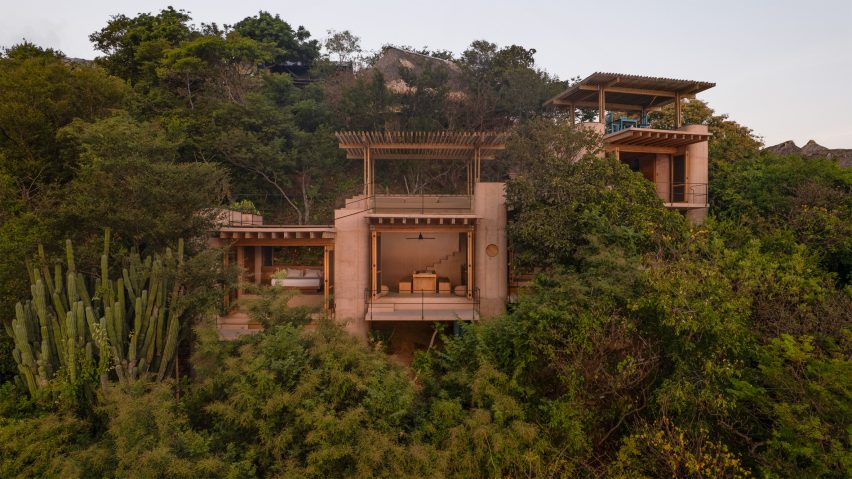
A column has one job. It stands there and it carries the load and it keeps the roof from lying down on the floor, and it asks for nothing in return, and most of the time we are so embarrassed by how plainly it does this that we bury it inside a wall and never look at it again. The column is the most honest element in the whole building. It is also the one we hide the hardest.
Studio Font, a practice working on the Oaxacan coast, has just finished a house that does the opposite. Casa Diez Pies sits on a steep cliff above the Pacific in Mazunte, and it stands on ten large concrete columns, and the columns are not hidden inside anything. They are the house. Inside the fat curved shafts are the staircases and the bathrooms and the closets and the storage, so that the thing holding the building up is also the thing you wash in and climb through and keep your shoes in. The name means Ten-Foot House, or House of Ten Supports, depending on how you hear it, and either way the count is the point.
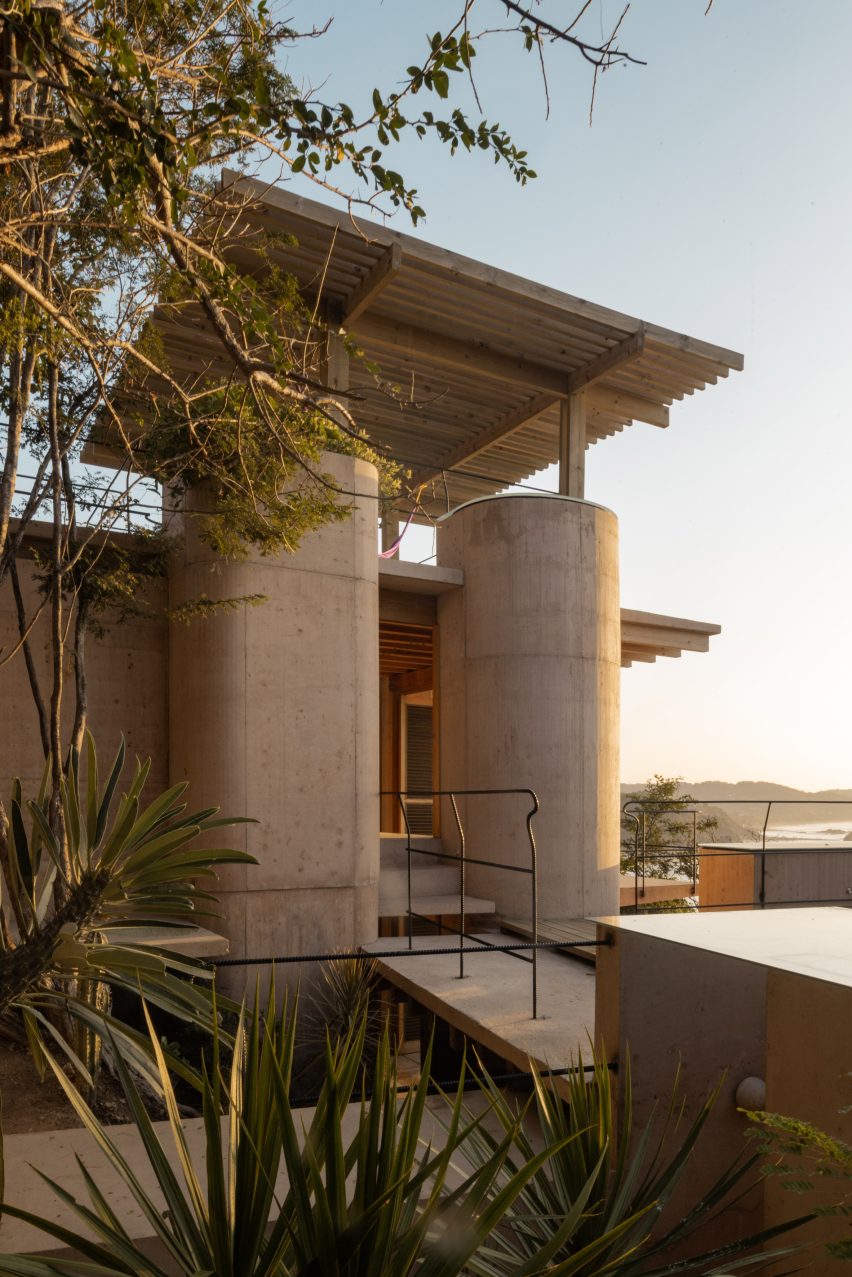
This is a real idea and not a styling move, which is a distinction worth making because the two look identical in a photograph and are opposite in a building. A styling move dresses the structure up. An idea makes the structure do more than one thing at once. Studio Font founder Raquel Font told Dezeen that each support becomes "structure, programme and enclosure simultaneously," which is the whole project in five words, and it is the kind of sentence that is easy to say and very hard to build. To make a column that is also a room, you have to give up the tidy separation of skeleton and skin that most buildings run on. You have to let the bones do the living.
The columns were cast in place, with reinforcement bars bent by hand and formwork built custom to pull the curved corners, and the concrete was pigmented a pale terracotta so it reads warm instead of grey. The curves were borrowed from the rock formations at nearby Punta Cometa, where the peninsula meets the sea and the stone has been rounded by water over a length of time no client has ever had. So the house is standing on ten pieces of coastline, more or less, translated into a material we know how to pour.
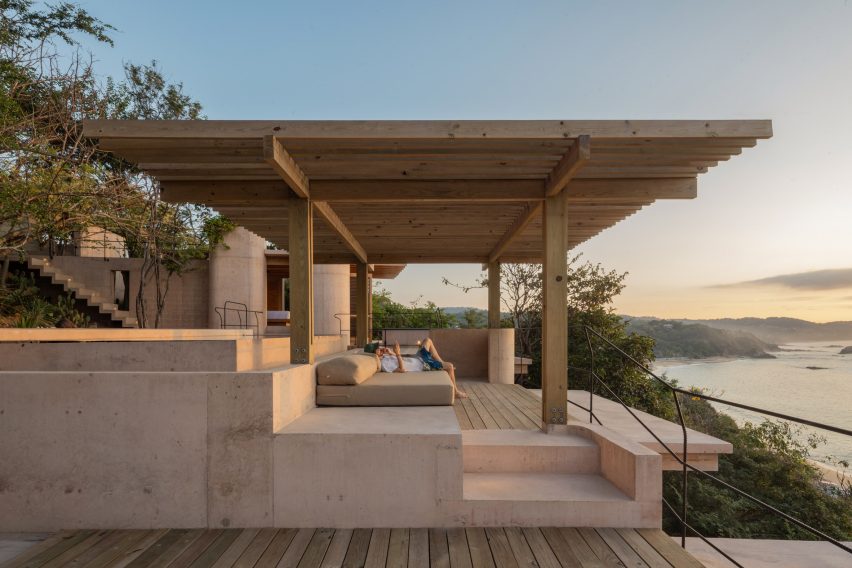
Raising the house on columns also let it touch the cliff as little as possible. The slabs step down the hillside following the slope, and the vegetation runs underneath, and the rooms open toward the water through full-height wooden shutters that fold back onto individual balconies. There is a lightness to the plan that the heaviness of the material keeps honest. You can see the whole argument at once: mass, doing the least damage it can manage, on a site that was here long before the house and will be here long after.
We keep four dead architects on the wall in this office, and two of them are in this building whether Studio Font was thinking of them or not. Tadao Ando taught a generation that concrete could be tender, that a bare wall and one rectangle of light could feel like the safest place on earth. Paul Rudolph taught that the structure should tell the truth about how it was made, even when people call the result ugly. Casa Diez Pies takes Ando's warmth and Rudolph's candor and puts them to work on the humblest element in the toolkit, the column, the thing we usually apologize for. It does not apologize. It moves in.
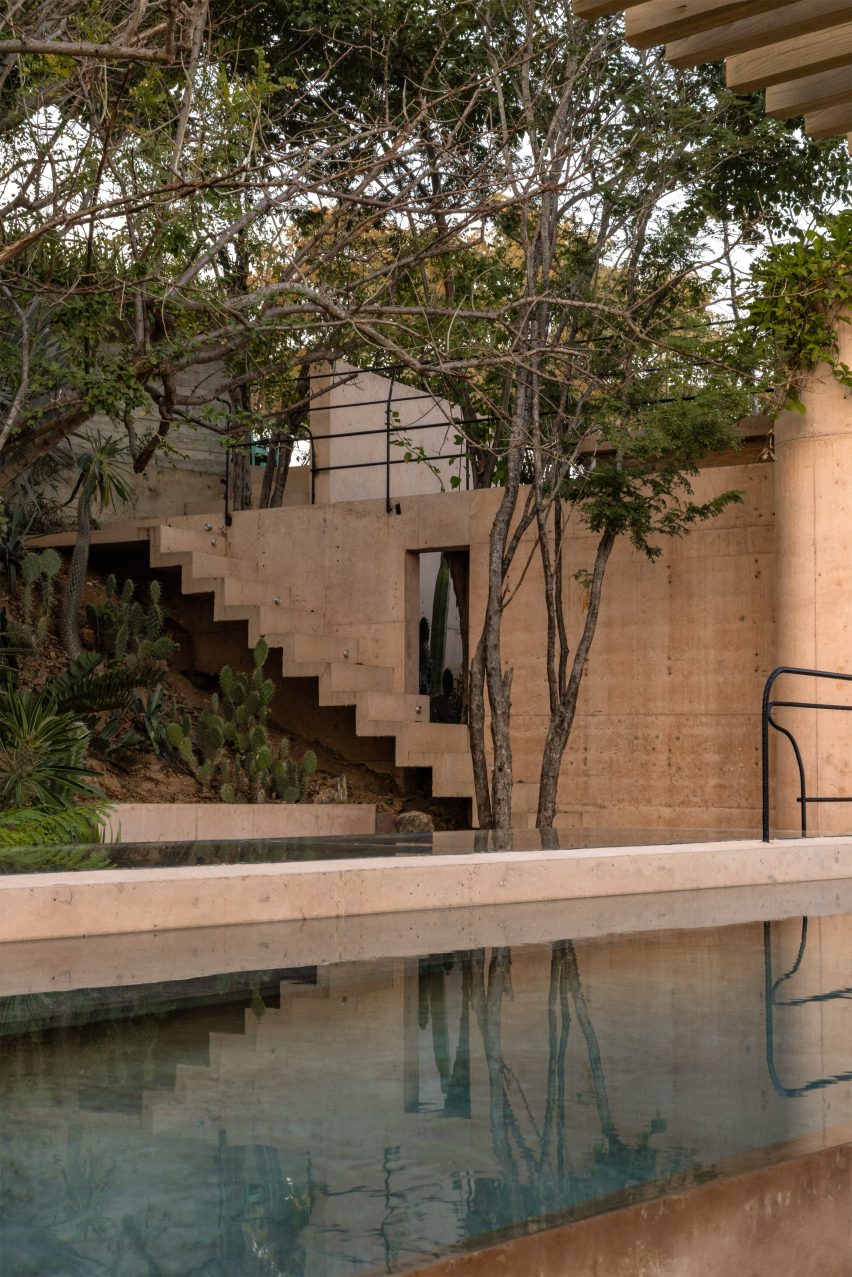
The interiors are lined with timber, ceilings and walls and built-in carpentry, brought in to soften the concrete and give the hand somewhere warm to land. Some of the columns are capped with glass and become skylights, dropping a column of sun down through the room below. Some are capped with soil and become planters. A support that carries the house, drains the shower, holds the towels, and grows a small garden on its head is a support that has stopped being furniture for the building and started being the building.
None of this makes the concrete care. Pour it and it will hold up the house for a hundred years whether the house is loved or forgotten, whether the shutters are open or the salt has taken the timber, and it will keep the shape of the rock it was named after long after everyone who admired the reference is gone. That is the deal you make with mass. You give it a job and it does the job, past the point of your attention, past the point of your life.
What Studio Font did was give it a better job. Ten of them. And still it stands.
Sources & Credits
- Reporting and quotation: Jon Astbury, "Studio Font perches cliffside home in Mexico on inhabitable concrete columns," Dezeen, 16 July 2026. https://www.dezeen.com/2026/07/16/studio-font-casa-diez-pies-mexico/
- Quotation from Studio Font founder Raquel Font as reported by Dezeen.
- Photography: Alberstudio, via Dezeen.