The Fork Was Finished in 1958
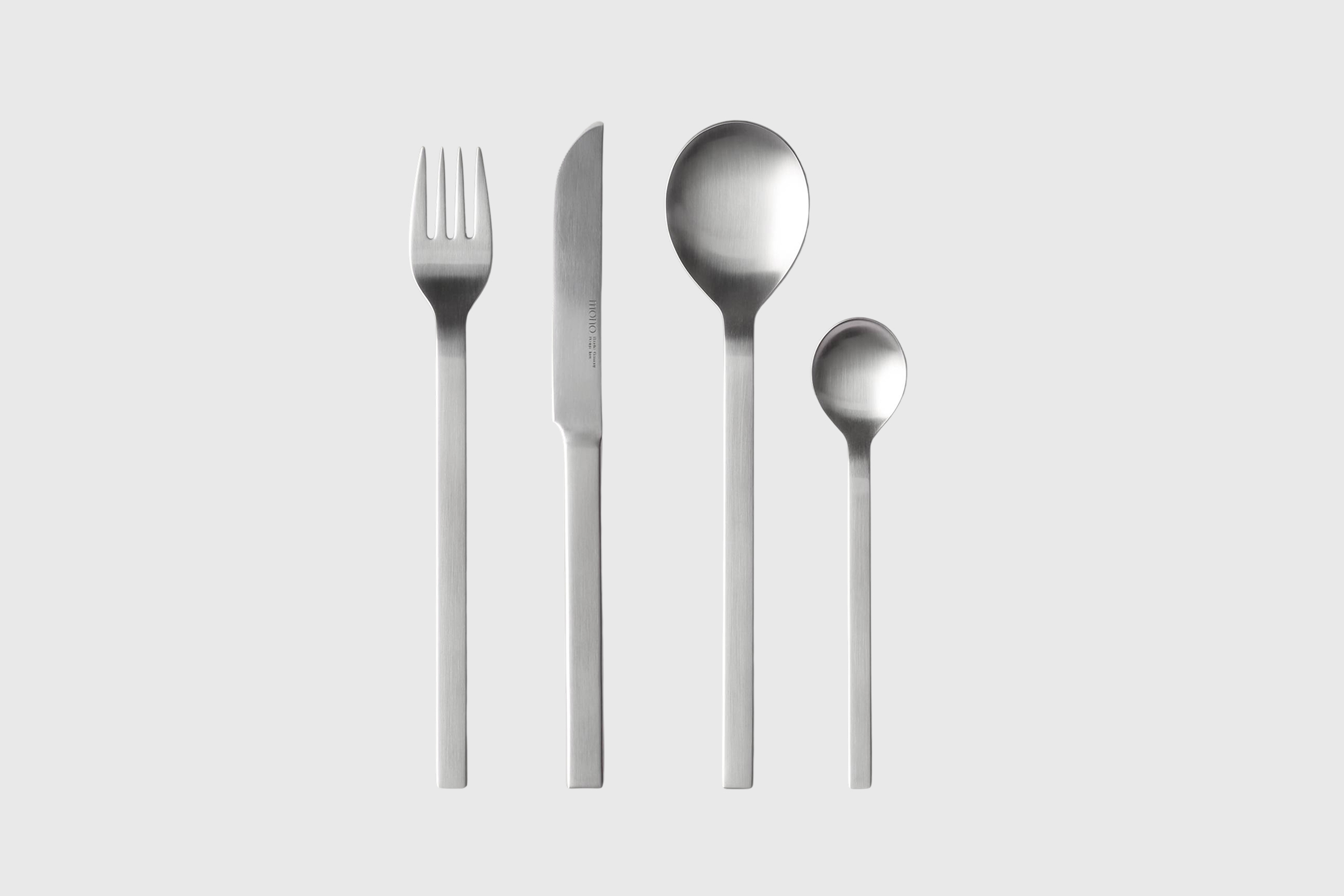
In 1958 a German designer named Peter Raacke drew a fork, and a knife, and a spoon, and a small spoon, and then he stopped, because he was done. The set is called Mono A. It is brushed stainless steel from end to end, flat planes and plain proportions, one continuous material doing everything, and Minimalissimo, writing about it this month, calls it "one of the most reduced expressions of post-war everyday German design." Sixty-eight years later it is still in production. Not revived. Not reissued with a heritage label and a story about the archive. Still in production, the way a bridge is still in service, because it never stopped working.
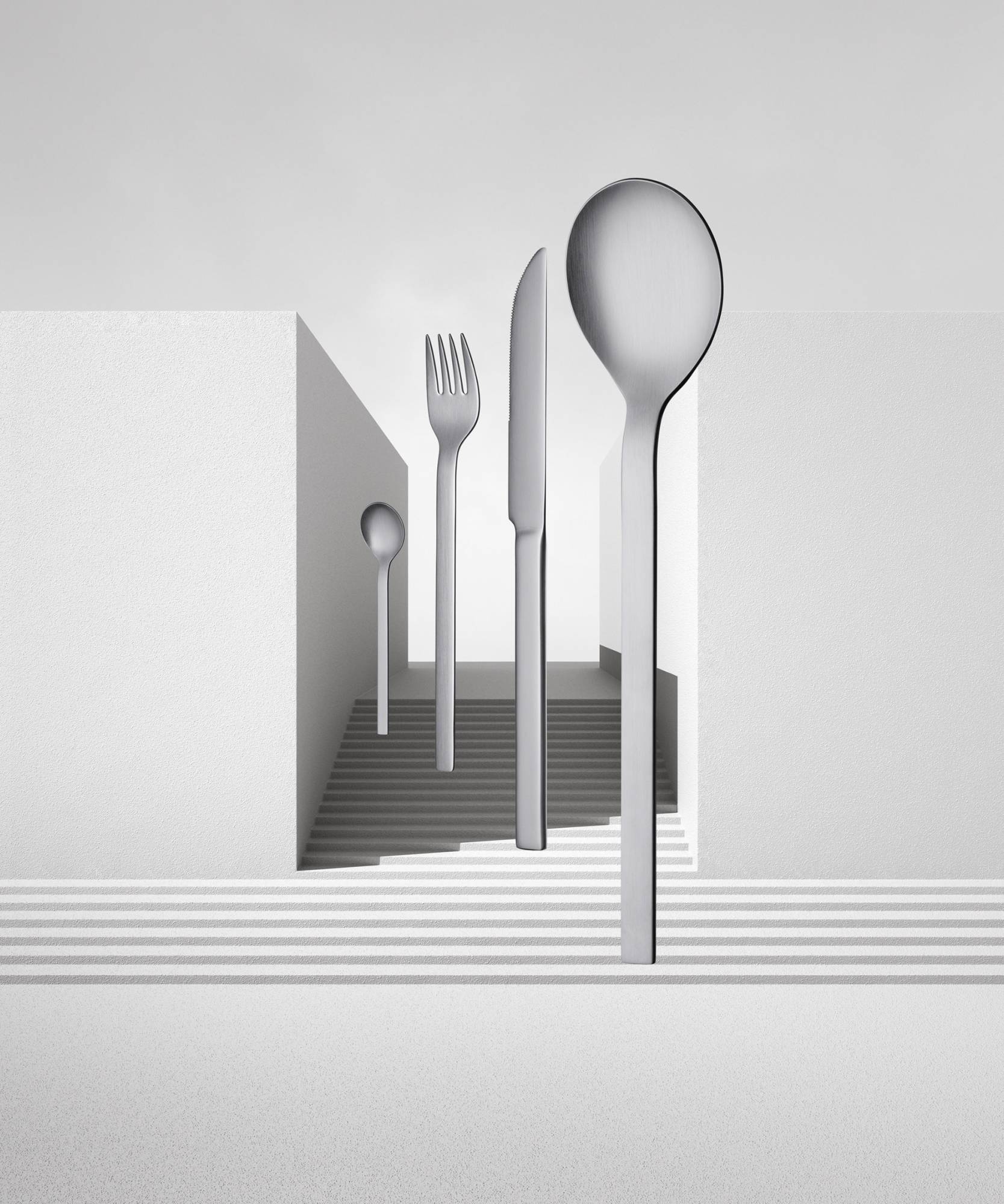
Think about what a fork has to survive. It goes in the dishwasher a thousand times a year. It gets dropped, borrowed, bent back, inherited. It is held by children learning and by old hands that have held ten thousand forks and cannot be fooled by one. A fork has no facade to hide behind and no lobby to impress anyone in. It is the smallest piece of architecture most people will ever own, and they will judge it the honest way, with their mouths, three times a day, without ever once thinking about the designer. That is the toughest client there is.
Raacke's answer was to take things away until the object could not be argued with. "What results," Minimalissimo writes, "is a table object that resists ornament and instead relies on proportion, weight, and repetition to define its presence." Proportion, weight, and repetition. You could run a decent architecture school on those three words and nothing else. There is a long-bladed knife in the family, and the blade is simply the same idea allowed to keep going, the flat plane stretched until it becomes an edge. Nothing on any of the pieces asks to be noticed. Everything on them has a job.
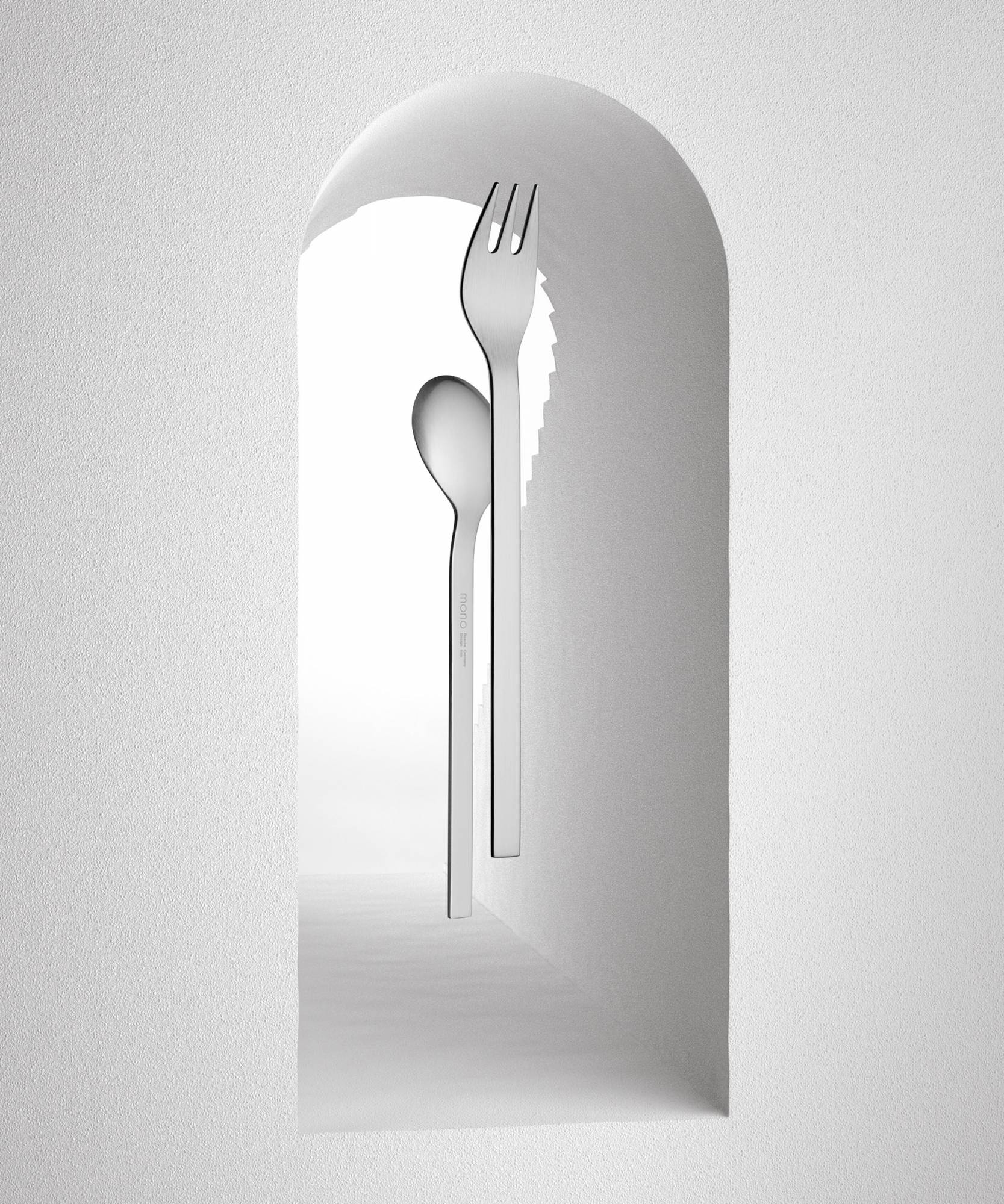
This is the Germany of the same postwar current that gave us Hans Gugelot and the disciplined household object, a country that had decided, for hard reasons, that things should tell the truth and last. And it points forward too. Decades later Naoto Fukasawa and Jasper Morrison would give this exact quality a name, super normal, the goodness of objects so resolved they have become almost invisible, and if you want to know what they meant you can skip the book and open a drawer that has Mono A in it. We keep Gugelot on our influence list, and Fukasawa, and Morrison, and this fork is the argument all three were making, executed in 1958, in steel, at dinner.
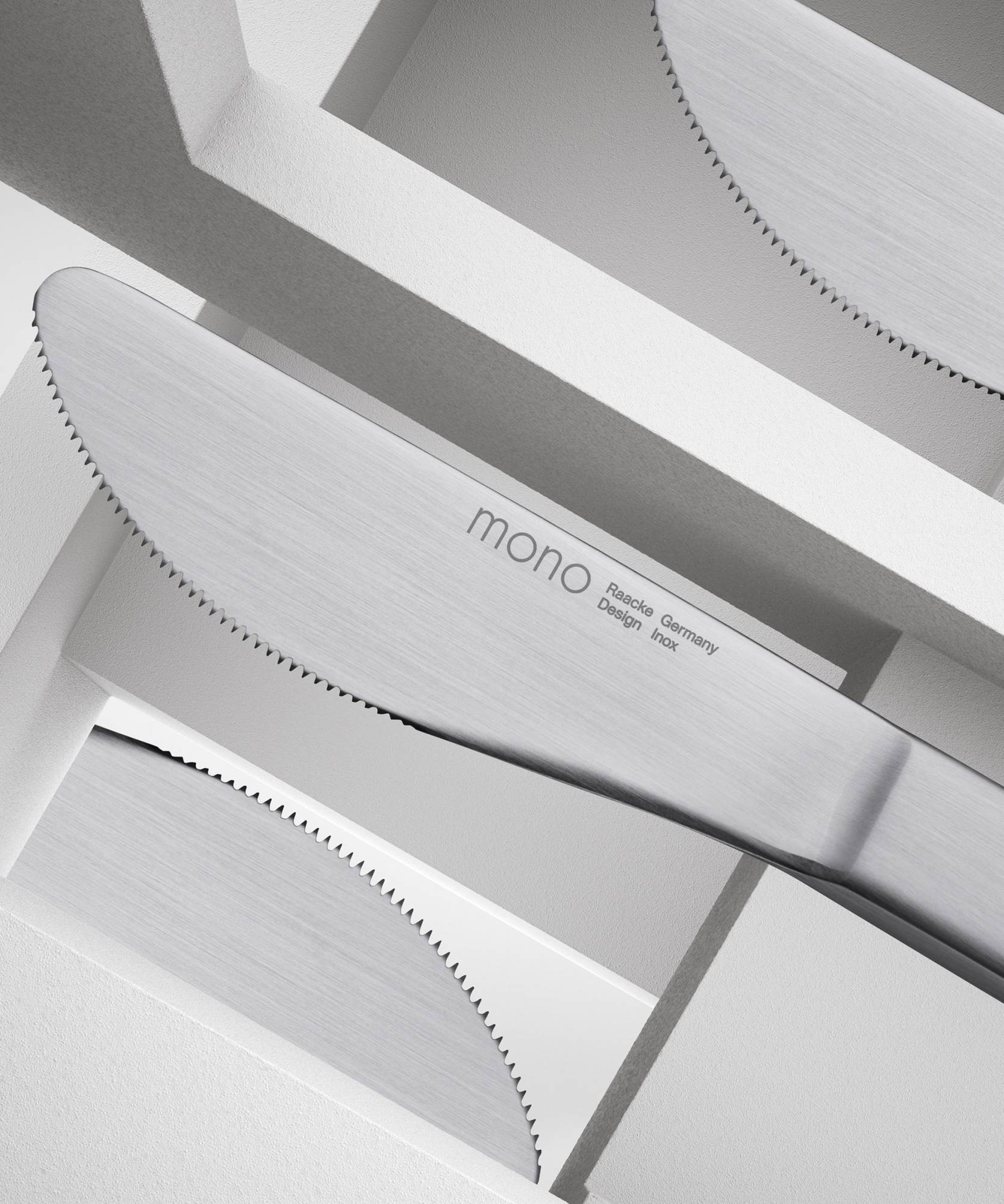
Here is the part worth sitting with. Minimalissimo notes that the design remains "unchanged in concept but refined through production," which is the quietest sentence in the piece and the most radical. Sixty-eight years of tooling improvements, and not one styling cycle. No facelift, no special edition shaped like the decade it was sold in. The industry that produces most of the objects in your house cannot do this, because the industry is not paid to finish things. It is paid to keep them slightly unfinished forever, so there is a reason to sell you the next one. A finished object is a commercial emergency. Raacke committed that emergency on purpose, and the little factory making Mono has been living calmly inside it ever since.
Buildings should envy this fork. Most of what gets published this year, including much of what we admire, will be renovated into something else within thirty years, and the renovation will be announced with the word "reimagined." Mono A required no imagination twice. Someone paid attention the first time, completely, to the hand and the mouth and the steel, and then had the nerve to stop. The fork was finished in 1958. Most things never get to be finished at all.
Sources & Credits
- Reporting and quotations: "Mono A Cutlery," Minimalissimo. https://minimalissimo.com/articles/mono-a-cutlery
- Design: Peter Raacke, 1958. Manufacturer: Mono. https://mono.de
- Photography: Haw-lin Services, via Minimalissimo. https://minimalissimo.com/articles/mono-a-cutlery