The Manual Was About the Photographs
There is a version of Dieter Rams that has been flattened into a poster. It has ten lines on it and it hangs in a lot of offices, usually near a coffee machine that violates most of them. Good design is innovative. Good design is honest. Good design is as little design as possible. The lines are true, and they are also the least useful thing anybody ever got out of Braun, because a principle costs nothing to agree with, and agreeing with it is not the same as being bound by it, and a wall full of agreed-upon principles is how almost every practice in the world quietly does whatever it wants.
The useful part is smaller and much less quotable. It is a book.
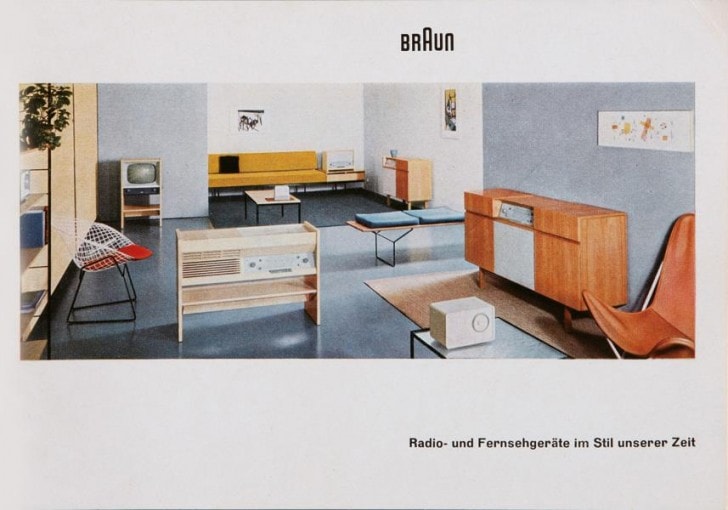
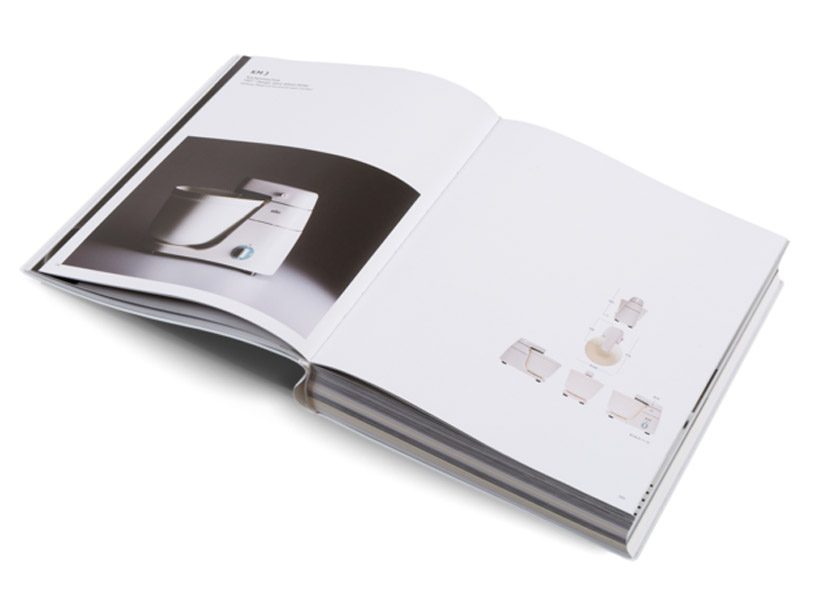
Sight Unseen went looking at the Gestalten monograph Less and More: The Design Ethos of Dieter Rams back in 2010, and reported that the products were the expected part. What caught them was elsewhere: "a section devoted to Braun's beautifully understated communication design and to that department's fearless leader, Wolfgang Schmittel." Schmittel, they wrote, "ran a tight ship," and here is the mechanism, in their words: "an in-house manual went out to each member of the design team with instructions on how to appropriately and inappropriately market the Braun product line." The result, quoted in the same piece, was a company image that "differed greatly from the existing design forms of other manufacturers at the time, due to its clarity." (Sight Unseen, 2010)
Read that again with a specifier's eye. The rules were not only about the radio. The rules were about the photograph of the radio, and the page the photograph sat on, and the type beside it, and what a member of the design team was permitted to do when the object left the studio and entered the world as an image. Somebody at Braun understood that a product is not finished when it is finished. It is finished when the last person who touches it is done, and that person is almost never the designer.
We know how this goes because we watch it happen to buildings. A wall gets detailed for months. The reveal is drawn, and argued about, and drawn again. The plasterer is chosen because of a job in another borough that nobody but us went to see. The paint is a flat mineral finish selected specifically because it eats the light rather than bouncing it, which is the entire point, and which took two site mockups to prove. Then the job finishes and a photographer arrives with a light on a stand and puts a hard raking beam across that wall to make it look tactile, and the wall now looks like stucco, and that photograph is the only thing that eleven thousand people will ever see. The wall is fine. The wall is doing exactly what it was asked to do. The record of the wall is a lie, and the record is what survives.
Nobody writes a standard for that. Firms write standards for everything else: drawing conventions, sheet numbering, specification format, which line weight means what, whether a table header is a fill or an underline. All of it is about how the work gets made. Braun had the other half. Braun had a document about how the work gets shown, issued to the same people, with the same authority, and the reason Braun still looks like Braun in a photograph taken in 1962 is mostly that document.
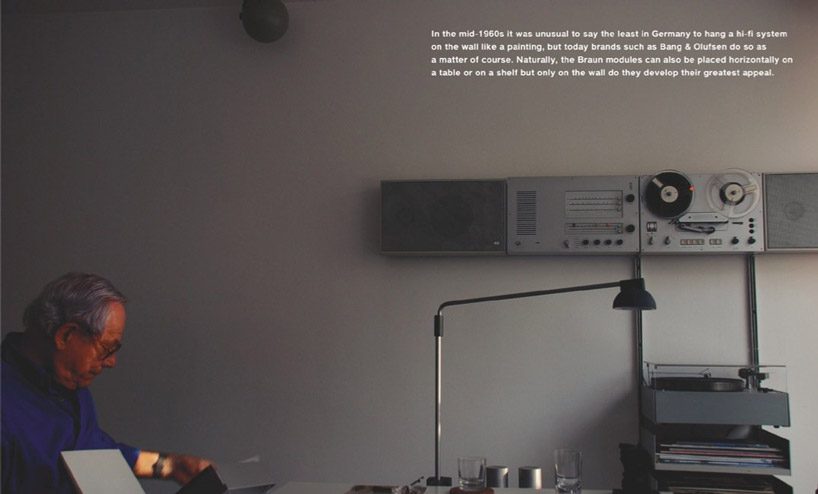
designboom, revisiting the same book, described Rams as having built "an elegantly clear visual language" that "not only defined product design for decades, but also our fundamental understanding of what design is and what it can and should do," and credited him with always pursuing "an ideal relationship between the internal and external." (designboom) That last phrase gets used about the objects, and it fits the objects, and it fits the brochures better. The internal is the thing. The external is every representation of the thing. Braun held them to the same tolerance.

There is an obvious objection, and it deserves an honest hearing: this is brand control, and brand control is not design, and dressing it up as ethics is how a corporation gets a halo it did not earn. Braun was selling shavers. A manual that tells your staff what they may not say about the shaver is a marketing department with better taste, and taste is not virtue.
Fair enough. But the objection assumes the manual existed to protect the sale, and the evidence points somewhere less flattering to marketing and more flattering to Schmittel. A department optimising for sales does not arrive at understatement. Understatement is what you get when the thing being protected is the accuracy of the claim. The Braun photograph is plain because the Braun product is plain, and the photograph's job was to not oversell it. That is not brand management. That is a refusal to lie about your own work, enforced in writing, on people who worked for you.
Here is what we take from it, which is not a poster.
Write the second manual. Every practice has the first one. Very few have the second, and the second is where the work actually leaks out. Decide, in advance and in writing, whether the furniture in the shot may be furniture the client does not own, and whether the sky gets replaced, and whether the room may be shot at the one hour of the one day when the light does something the room will not do again, and whether a rendering may show a material you have not priced. Then decide who signs off, and make it somebody who was on site, because they are the only one who knows what the room is like at three in the afternoon in February.
None of this makes a building better. It makes the account of the building true, which is a smaller thing and a harder one, and after enough years it is the difference between a body of work and a portfolio.
Rams got his ten principles onto a lot of walls. Schmittel got one document onto a lot of desks. The document did more.
Sources & Credits
- Jill Singer, "Less and More: The Design Ethos of Dieter Rams," Sight Unseen, 12 February 2010. <https://www.sightunseen.com/2010/02/less-and-more-the-design-ethos-of-dieter-rams/>
- "'less and more' illustrates the functional design of dieter rams," designboom. <https://www.designboom.com/design/dieter-rams-less-and-more/>
- Less and More: The Design Ethos of Dieter Rams, published by Gestalten.
- Photography: Sight Unseen, via <https://www.sightunseen.com/2010/02/less-and-more-the-design-ethos-of-dieter-rams/>
- Photography: images © Gestalten, via designboom, <https://www.designboom.com/design/dieter-rams-less-and-more/>