The Weight Was in the Brief
Jasper Morrison and Hay have made thirty-odd objects for camping. The interesting part is that the constraints arrived before the designer did.
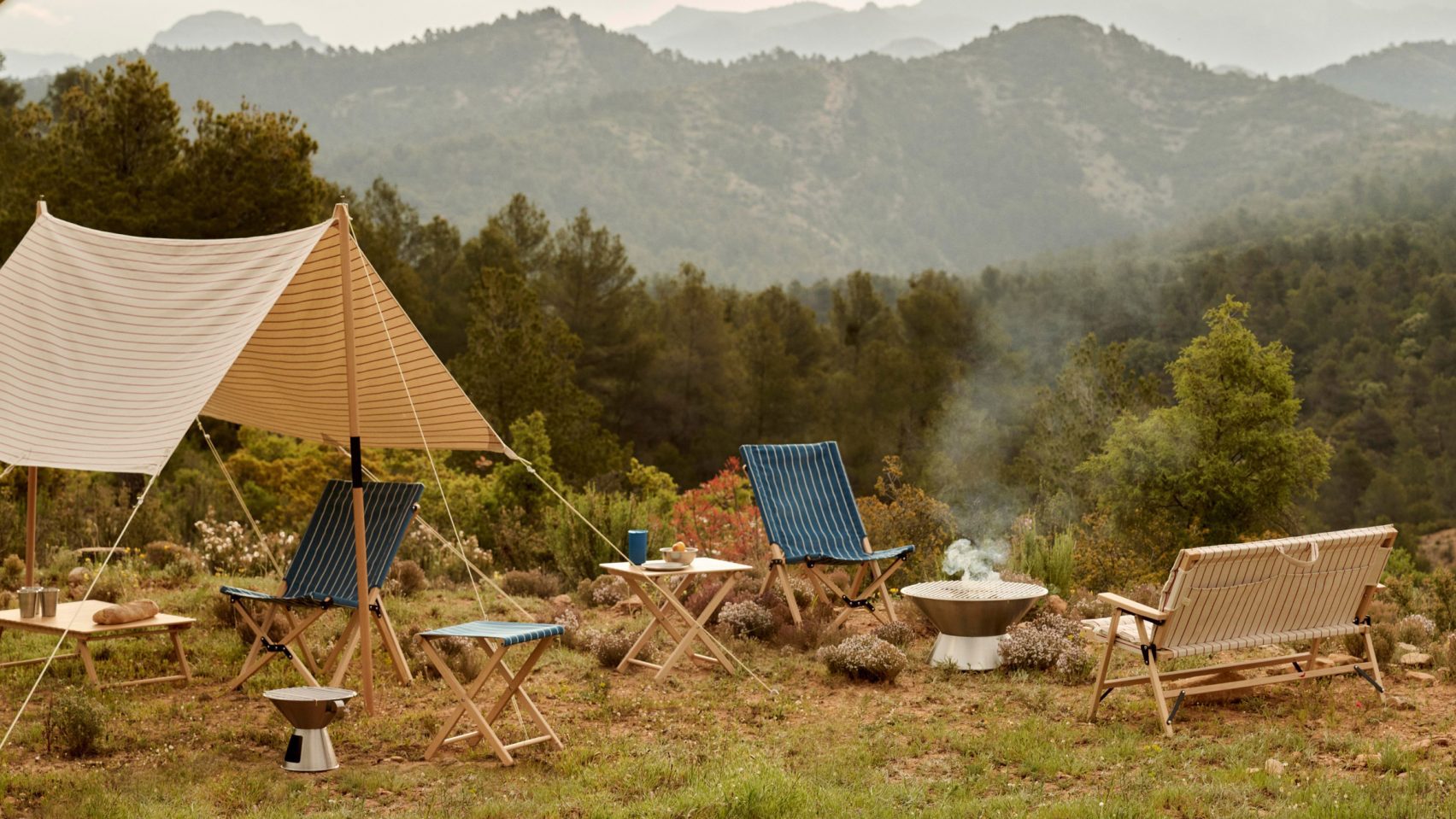
A folding chair has to survive a test that no armchair has ever had to survive, which is the moment somebody standing in a doorway with an armful of other things looks at it and decides whether it is worth carrying to the car. Nothing about taste enters into that. It is a question about weight, and about how flat the thing goes, and about whether the hinge will pinch a thumb in the dark, and the chair either passes or it gets left in the garage next to the bicycle pump. Furniture almost never gets asked this. Camping gear gets asked it every single time.
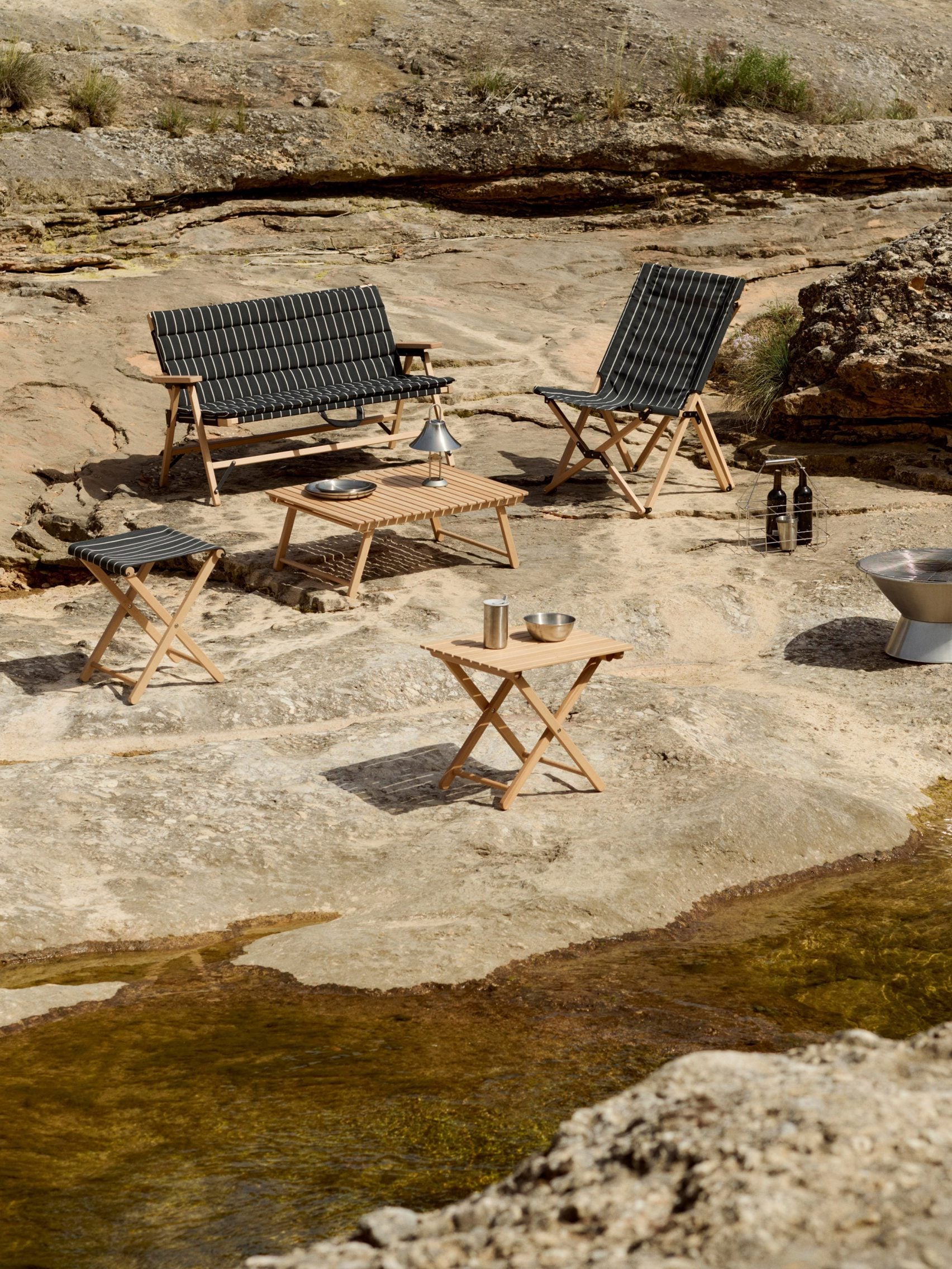
Jasper Morrison and Hay have just put out a collection of more than thirty objects for being outdoors, launched at the MoMA Design Store in New York, and reported by Ellen Eberhardt at Dezeen. There are foldable lounge chairs. There is a fish-shaped barbecue. There is a tent-shaped canopy, a stainless steel crate for carrying bottles, a folding sofa that packs down into a large tote, and a set of brooms for cleaning up afterwards, which is the detail that tells you somebody in the room had actually been camping. The material palette is red, white and blue striped textile, stainless cookware, and a light beech for the folding frames.
Morrison told Dezeen he found the category "fascinating," and then said the thing worth writing down: he likes that outdoor equipment has "such tight constraints of practicality, folding and lightness." He added that it is "a whole side of design, which, as designers for residential interiors, we sometimes forget."
We would put it harder than he does. Camping equipment is the only consumer furniture category on earth whose brief is written in numbers before anybody picks up a pencil. It has to fold. It has to be light enough to be carried by one tired person. It has to take rain, and then dry, and then take rain again. It has to be fixable at a campsite with a pocket knife and whatever is in the glovebox. None of that is a preference and none of it is negotiable, and all of it is printed on the side of the box, where the customer can check.
Now think about how a sofa gets specified. Somebody says warm. Somebody says inviting but not fussy. Somebody sends a photograph of a different sofa. We have sat in a great many of those meetings, and we can tell you that the single hardest thing to get out of a brief is a number. Buildings are better, but only because the code supplies the numbers whether anyone wants them or not: so many inches of tread, so many feet of egress, so many pounds per square foot. Left alone, nobody writes the number down.
So the honest reading of this collection is that it is the easiest work of Morrison's career, and that is a compliment. He has spent forty years arguing for a discipline that this category simply hands him at the door.
Forty years is the right number. Morrison opened his Office for Design in London in 1986, and in 1988 he showed "Some New Items for the Home" at the Berlin Design Werkstadt, and the Plywood Chair comes from that same year, per his own biography. The Thinking Man's Chair he dates to 1985. Anyone who has looked at that late-eighties work knows what the constraint was then: there wasn't any money, and there wasn't much material, and the restraint you read as a position was partly just an inventory. Plywood, bent rod, the minimum. The eighties handed a generation of designers a poverty of means and a few of them turned it into an argument that has outlived the poverty. That is the window CP keeps coming back to, and this collection is the same hand, working with a constraint it did not have to invent.
Then there is the striped fabric. Morrison found the samples in Majorca and in the Pyrenees, which is a lovely sentence and not a performance requirement. Hay said the collection was partly shaped by the outdoor boom of the pandemic, when the look of gear leaked into fashion and pop culture. A fish-shaped barbecue is a joke about a fish. So a portion of this is costume, worn by objects that did not need it, and we would rather say so than pretend that every stripe is load-bearing.
A thing can be both. The stainless crate is still a stainless crate, and it will outlive the trend that sold it, and in nine years somebody will be using it to carry firewood with the stripes long gone off the chairs. Morrison described the method as "looking for things that are useful, characterful and affordable," in that order, and the order is the whole position. Useful first. Characterful after. Affordable so that the thing is actually in the world rather than in a photograph.
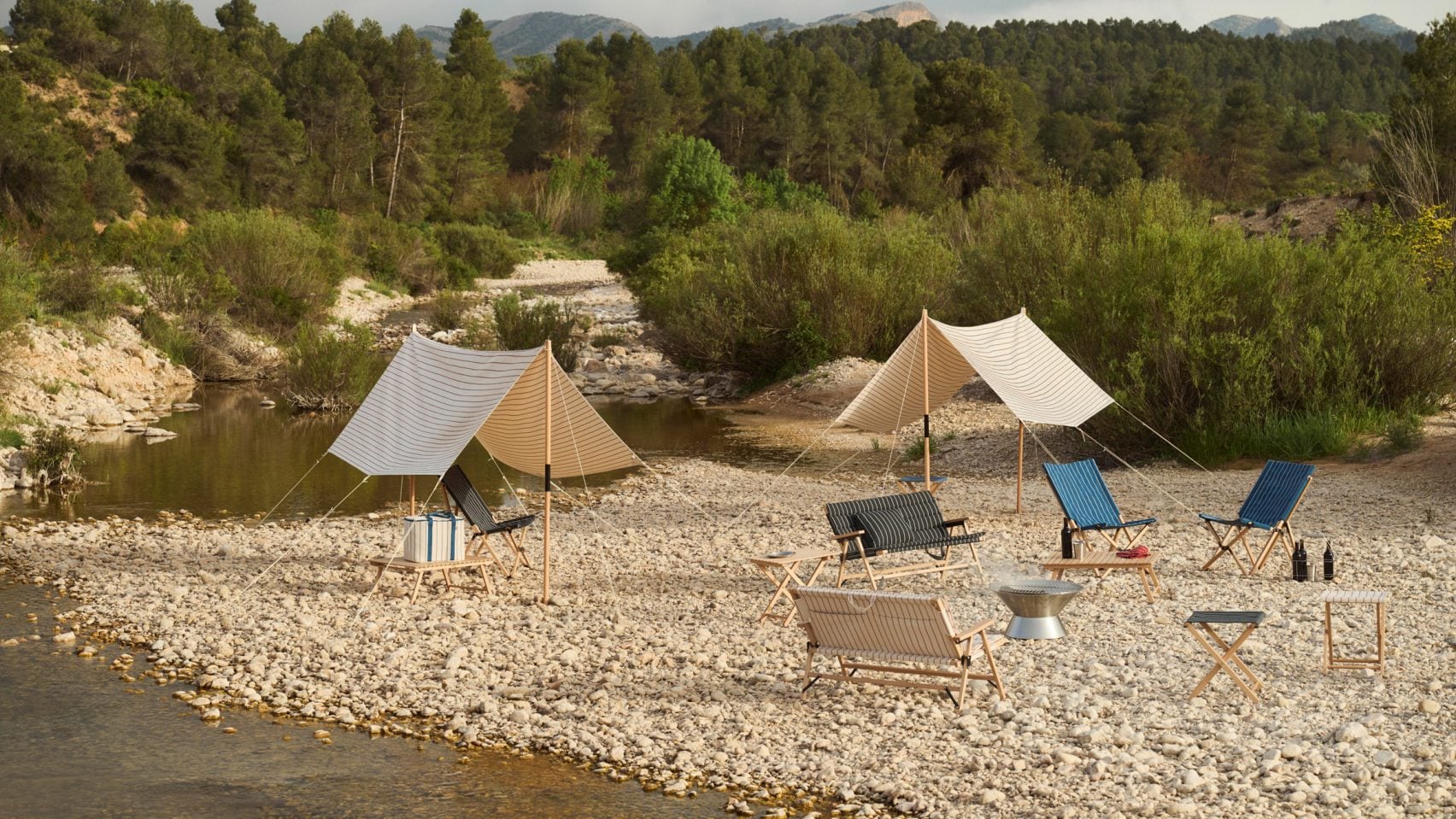
Here is what we take from it, standing in a park on a Saturday with a bag we have to carry back. The objects that settle a person outdoors are the ones that have already answered the boring questions, so that nobody has to think about them again. The chair opens. The grill lights. The sofa goes back in the tote, because somebody specified the tote.
It has to go back in the bag. Nobody writes that down, and the catalogue did.