What the Stopper Leaves Behind
Jasper Morrison pressed the offcuts of cork stopper production into one-off furniture. The interesting part is not that it was sustainable. It is that cork finally got asked to hold something up.
Cork arrives in most projects the way a candle arrives at a dinner party, which is to say late, cheaply, and in order to make something feel a particular way. It goes on a wall in a room where people complained about noise. It goes on a pin board. It goes under a laptop in a photograph of a workspace. It gets called warm and it gets called natural and it gets called sustainable, and every one of those words is a description of how the specifier hopes the client will feel rather than a description of what the material does. Then the project finishes, and the cork sits there doing nothing structural for twenty years, and nobody ever asks it a hard question.
Jasper Morrison asked it one.
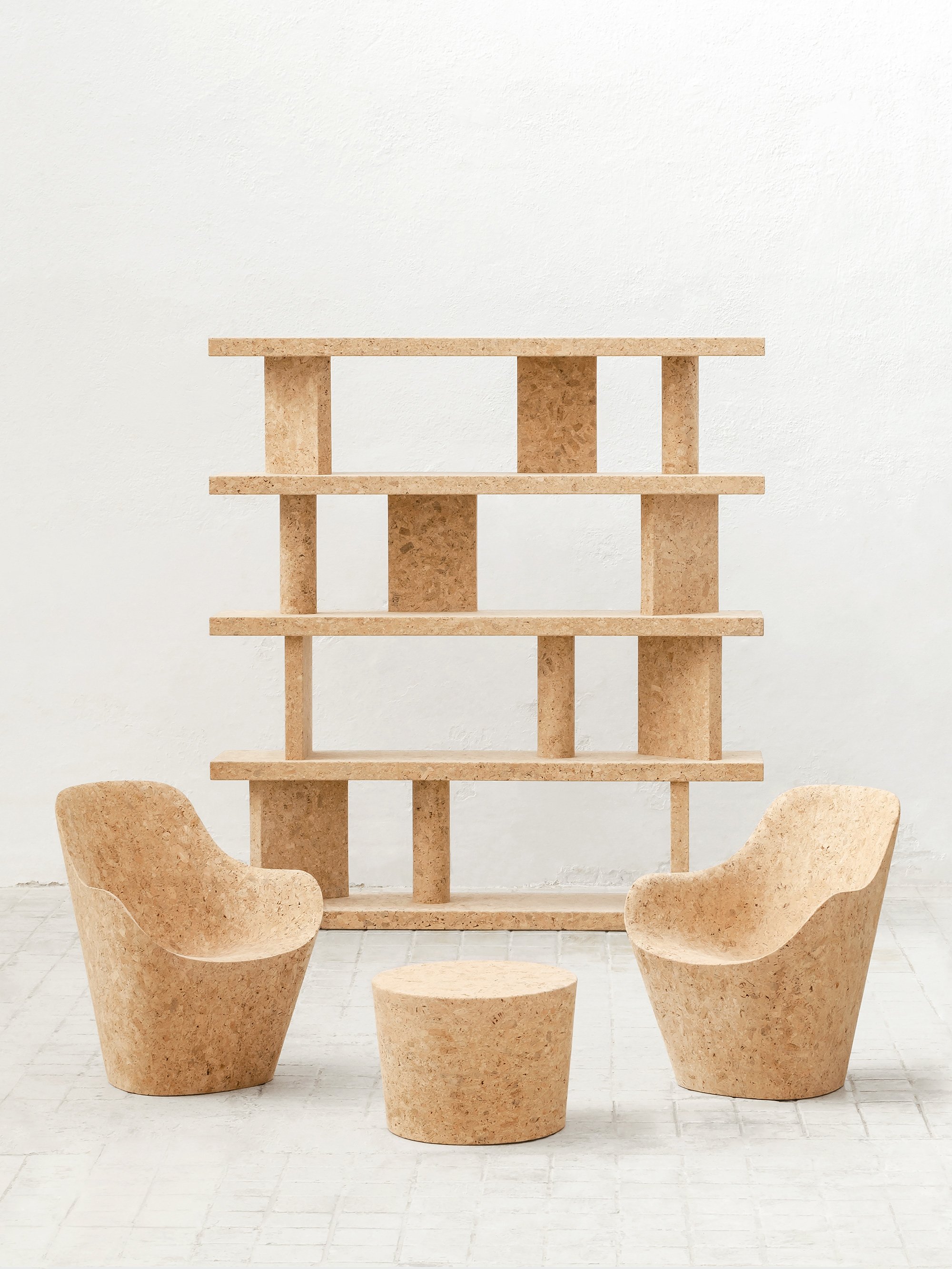
The series was called Corks, and Gessato reported it as his first solo gallery show in North America, at Kasmin on Tenth Avenue, running until the end of June 2019. The pieces were one-of-a-kind: a fireplace surround, a dining table, chairs, a chaise lounge, bookshelves, stools that also work as side tables. The material was the part worth noticing. According to Gessato, these were made from wine bottle stoppers left over from cork stopper production, pressed into a reconstituted block, with the outlines of the original stoppers still legible on some of the surfaces.
Think about the supply chain in that sentence for a second, because it is stranger than it looks. Cork bark comes off the tree and the tree keeps living, which is already unusual among the things we build with. The stoppers are punched out of that bark, and the punched sheet is left over, and that offcut is what the industry normally grinds into flooring and gaskets and the backs of coasters. Morrison did not use that. He used the stoppers that the stopper business could not sell. This is the leftover of the leftover, a material that has already been rejected twice by people who were paying attention, and he pressed it into a block and cut furniture out of it.
And the furniture carries load. That is the whole argument, and it is easy to miss under the gallery lighting. A bookshelf in reconstituted cork has to resist deflection across a span while holding the dead weight of paper, which is one of the least forgiving loads in a house. A chair has to take a person landing in it badly, repeatedly, for years. Cork in compression is genuinely good at this, and cork recovers its thickness after being squeezed in a way that almost no other cheap material does, and it damps vibration while it does it. None of that gets used when the material goes on a wall. On a wall, cork is being asked to be a colour.
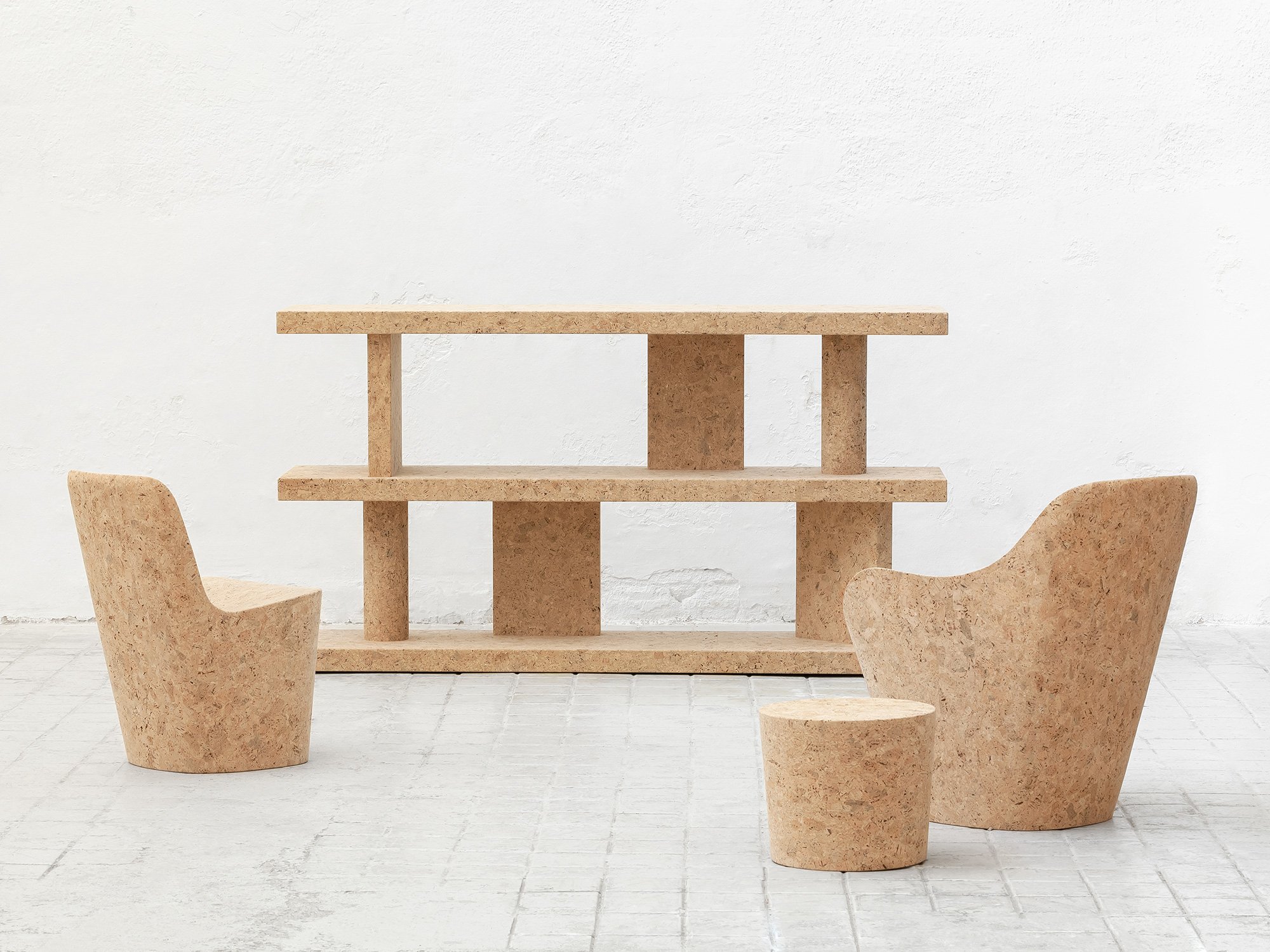
We keep coming back to this with the clients who want a warm room. They ask for a material that feels soft and they get offered something that is soft, and then the detail falls apart at every edge, because soft materials need hard edges to live against and nobody drew those. The alternative is to let a material do its actual job somewhere you can see it. Breuer did that with plywood and with aluminium and later with concrete, and the reason those pieces still read as serious is that the material is holding something up in plain view and you can check its work. A cork bookshelf is checkable. A cork feature wall is a mood.
Here is where we would push back, and it is not a small thing. Morrison built a reputation on the ordinary object: the chair you do not notice, the thing made in quantity, cheaply, well, for people who will never read a design magazine. Corks is the opposite format. One-off pieces, gallery walls, Chelsea, collectors. You can read that as a designer finally taking the gallery money, and plenty of people did.
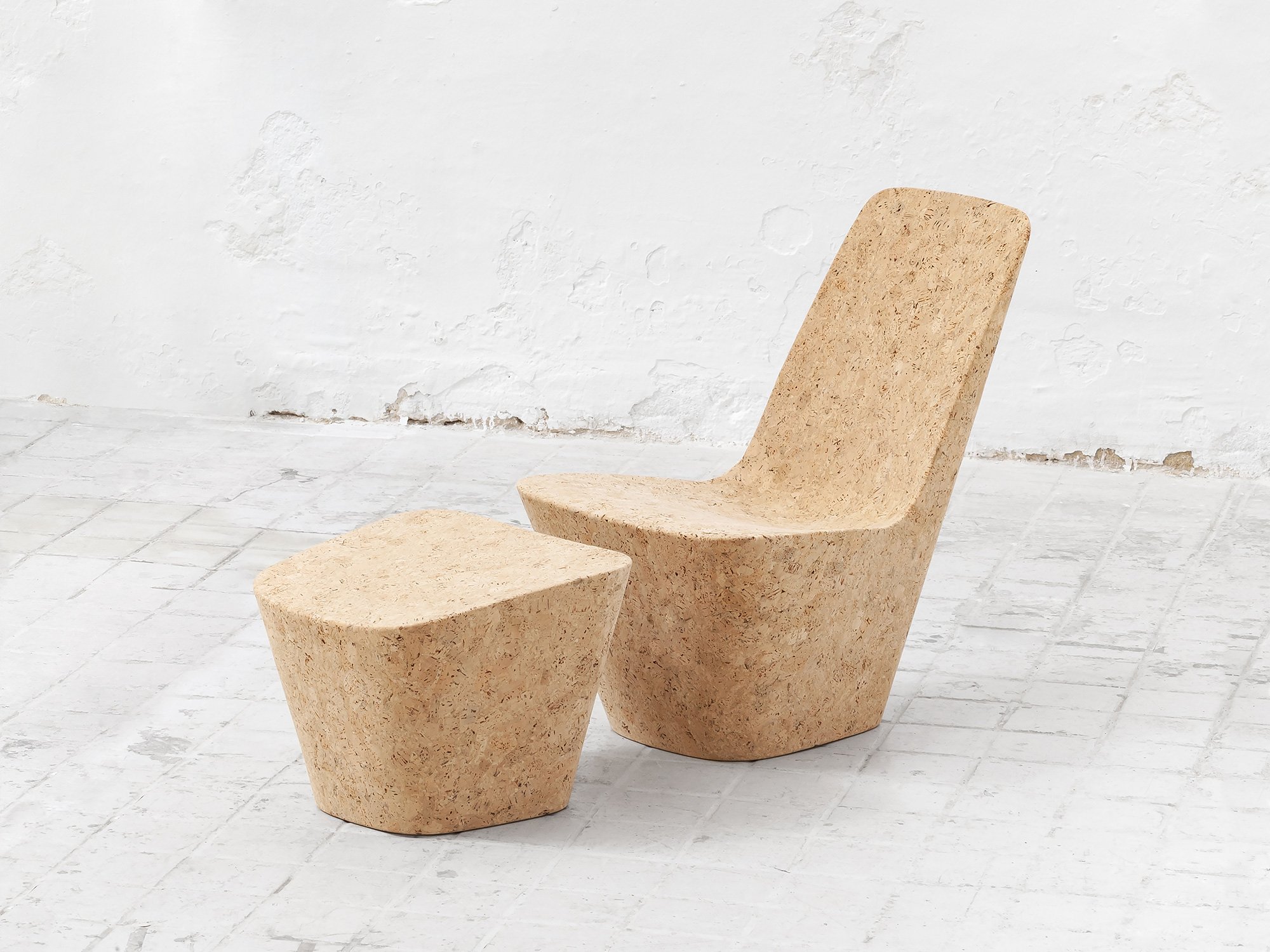
We read it differently. You cannot tool a material for production until somebody has proven the sections work, and nobody funds that proof. There is no R&D line item for "find out how thick a cork bookshelf has to be." The gallery is where that research gets paid for, by a collector who thinks they are buying an object and is actually buying a load test with a provenance. The one-off is the prototype with a price tag on it, and it is the only prototype that ever gets photographed properly.
Whether a production version follows is a separate question and the answer is usually no. Most of these experiments end in a catalogue nobody reprints.
But the stoppers are the thing. Somewhere there is a factory where the rejects pile up at the end of a line, and for most of a century nobody looked at that pile and saw a table in it. Somebody finally did. The tree, meanwhile, is still standing, and its bark is already growing back, and it will be ready to strip again in nine years whether or not anyone in Chelsea bought the chaise.