They Put the Wire Back
Sony has reissued the headphones that shipped with the first Walkman in 1979. Sixty dollars, a cable, two sets of pads you can pull off with your fingers. The lesson is not nostalgia, it is service life.
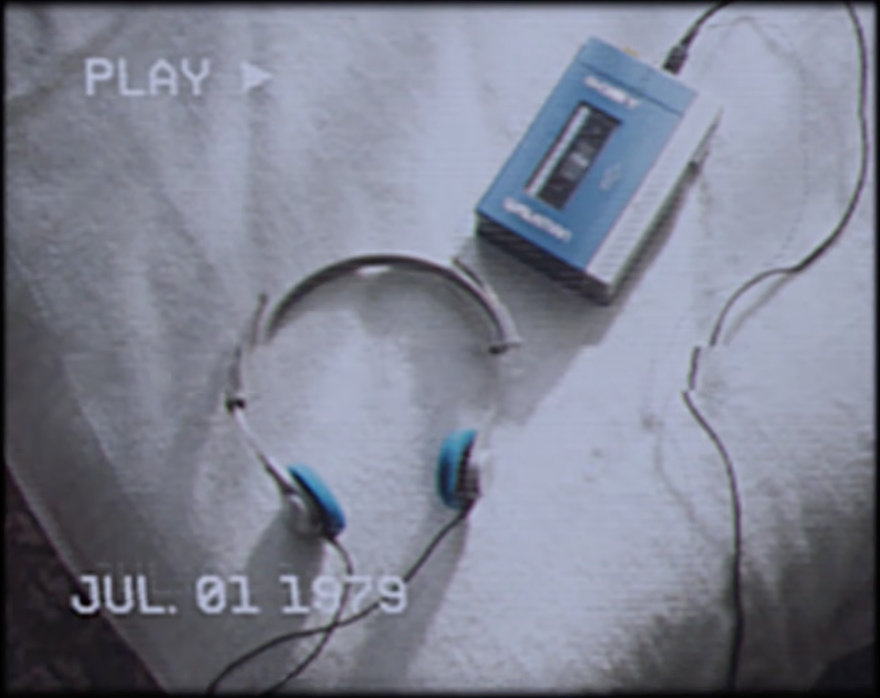
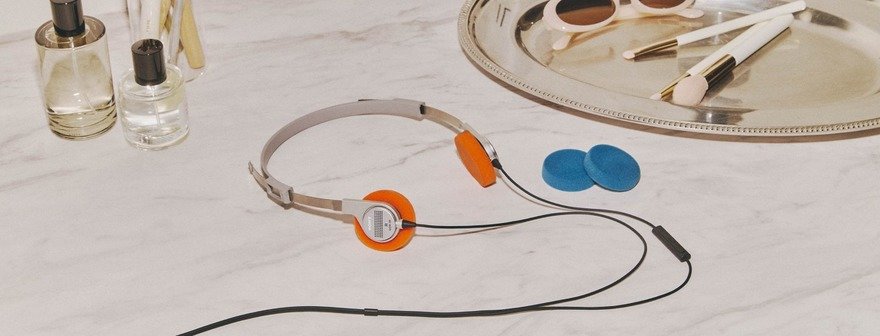
Here is a small object with a long argument inside it. Sony has brought back the MDR-3, the thin metal headband with the two foam pads that launched alongside the original Walkman in 1979, and it is now called the MDR-3R, and Core77's Rain Noe reports that the drivers have been updated, an inline controller has been added, the cable terminates in USB-C instead of a minijack, and otherwise "these look like what you saw on people's heads in the 1980s" (Core77). They cost sixty dollars. They come with orange pads and blue pads, which Sony says you swap "to suit your mood and attire."
The headline over the piece is "For Gen Z, not X," which is a nice flat way of saying that the people being sold this object were not born when it was designed, and that Sony knows it, and that the marketing department is not pretending otherwise. Fine. Everybody gets to sell what they have. What interests us is not who is buying.
What interests us is that the drawing survived forty-seven years and the tooling could be restarted, and that almost nothing designed since can say the same.
Noe sets up the reversal honestly. Apple shipped the first AirPods in 2016, and that looked like the end of the line, and then a subset of people noticed they had acquired one more object to charge, and that small things in pockets get lost, and that pairing fails at the exact moment you need it to work (Core77). None of those are aesthetic complaints. They are performance complaints, and they are the sort of thing that shows up two years into occupancy rather than at the photo shoot.

We think about this constantly when we specify hardware, because hardware is where a project quietly decides how long it intends to be good. Anybody can draw a door pull. The question that separates a specification from a mood board is whether the thing has a consumable, whether the consumable is cheap, and whether a person with ordinary hands can change it in the room without taking the assembly off the wall. A hinge with a replaceable pin outlives a sealed one by a factor nobody wants to put in a presentation. A fixture with a lamp you can buy at a hardware store outlives an integrated LED array that gets discontinued in a product cycle, no matter which one photographs better on day one.
The MDR-3R is that logic in sixty dollars of plastic and metal. The band is metal and it slides. The pads come off with your fingers, and the proof that they come off is that the box contains a second colour. The cable is visible for its whole length, which means it can be inspected, and blamed, and eventually replaced. The failure modes are all legible. You can point at the part that broke.
An earbud has one failure mode, which is the whole earbud. The battery in it is a consumable on a two or three year clock, and it is welded inside a sealed shell, and so the consumable and the product are the same object. That is not a scandal, it is just a decision, and it was made by serious people solving a real problem. But it means the product has a designed lifespan and the lifespan is the battery's, and a 1979 drawing came back because it had no battery to outlive.
So the reissue is not an act of taste. It is a fact about manufacturing. An object simple enough to be put back into production is an object whose idea was never load-bearing on a component that expired, and the plain ones keep coming back for that reason and not because the young are sentimental about a decade they missed.
We are not going to pretend the MDR-3R is a great piece of industrial design returning in triumph. It was a cheap accessory bundled with a tape player, it was designed to a price, and the sixty-dollar version is also designed to a price, and the inline controller is there because phones have no socket to argue with. Sony is selling a shape that reads as 1983 to people who learned about 1983 from a feed.
The object is still right. It was right in 1979 for the same reason it is right now, which is that it is light, it is adjustable, it tells you what it is made of, and the part that wears out is the part you can hold between two fingers and throw away.
Specify more things like that. The ones that come back are the ones that were honest about what would wear out first.