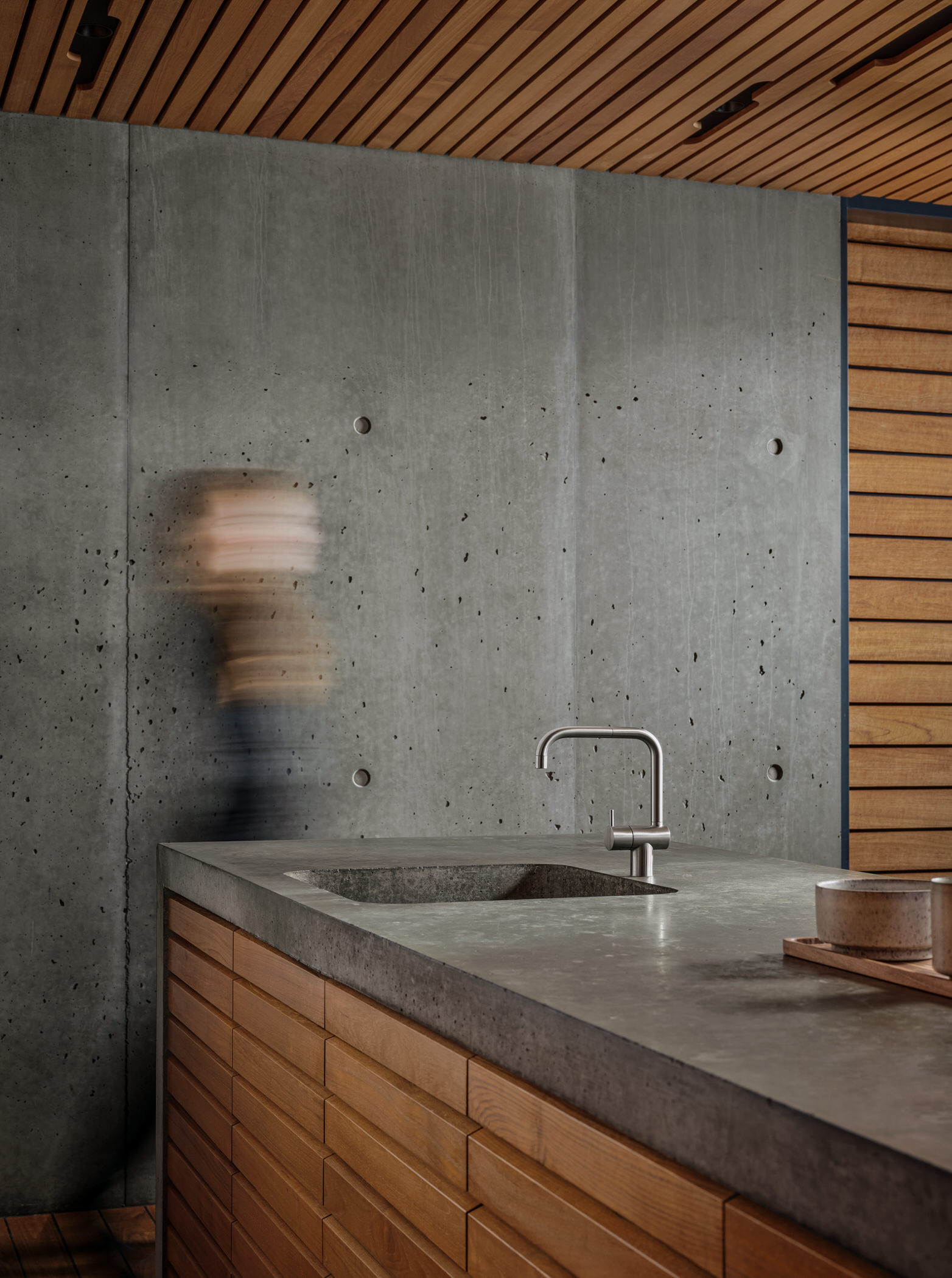
They Still Make the Part
A tap is the piece of a building that a person touches more often than anything else except the door, and it is the piece we specify last, from a PDF, in a hurry, usually on finish. Brushed. Matte black. Whatever the client saw. Meanwhile the decision that actually determines whether the thing is any good in ten years got made months earlier by someone drawing a wall, and nobody in the room called it a fixture decision at all.
Here is the sentence that made us stop on a three-year-old promotional post. VOLA, the Danish company, says it has "been providing parts for every product made since 1968, adhering to their original design. There is no obsolescence: everything is repairable, and new products are released only when there is a genuine need."
Read that again as a specification claim rather than a brand line.
We should say plainly that the piece we are quoting is advertising. Yellowtrace labels it, to its credit, in the body copy: "This Yellowtrace Promotion is supported by VOLA." So we are not going to pretend a brand told on itself. But the claim is falsifiable in a way most sustainability copy is not. Either the cartridge for a 1972 mixer exists on a shelf in Denmark or it does not. Either your plumber can get it in a week or your client is opening a wall. That is a testable promise, and almost nobody else in the fixture business makes it.
The origin matters more than the anniversary. The first VOLA was the 111, drawn in 1968 by Arne Jacobsen for the National Bank of Denmark, working from founder Verner Overgaard's idea of a concealed, wall-mounted mixer where only the handles and the spout come through the surface. Everything else went into the wall. Yellowtrace quotes the company on what happened after: "We have never changed the design, only updating the inner workings to enhance longevity."
That division is the whole argument, and it is an architectural one, not a styling one. The part you see never changes. The part you never see gets improved continuously. Most of the industry runs that exactly backwards: the visible object is restyled every three years to move units, and the mechanism inside is value-engineered downward until the whole assembly is cheaper to replace than to open. We wrote about a Rams door handle two days ago that died because its plastic core failed while its form was still perfect. Same disease, different organ.
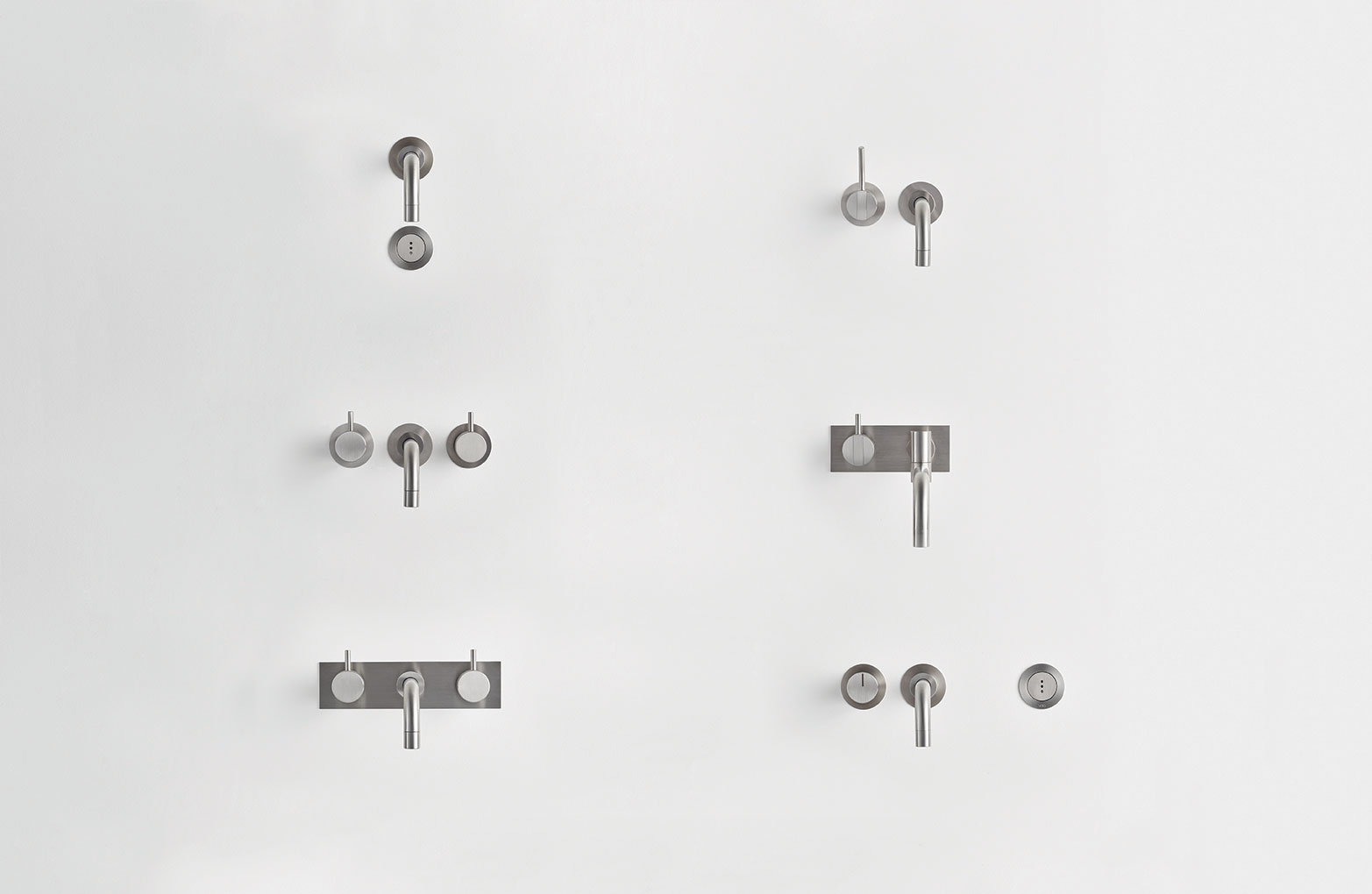
Now the part a designer has to actually decide. A concealed wall-mounted mixer is a commitment made at rough-in, which is to say before tile, before waterproofing, before anybody has picked a handle. The valve body goes in the wall, the tile goes over it, and from that moment the only serviceable route to the mechanism is through the escutcheon. Do it well and you have the cleanest possible surface: a stone or plaster plane, two handles, a spout, nothing standing on the counter collecting lime. Do it badly and you have buried a wearing part behind a permanent finish.
Which means the honest CP position is not "specify VOLA." It is this: the concealed rough-in is only defensible if the mechanism behind it is serviceable from the front, forever, by a plumber who has never heard of the architect. A wall-mounted fixture is a bet on a supply chain lasting as long as the tile does. Most manufacturers should not be trusted with that bet. A company that has stocked parts continuously since 1968 has at least shown its work. We keep a thermostatic rough-in valve in our own library for the same reason, and the reason is never the handle.
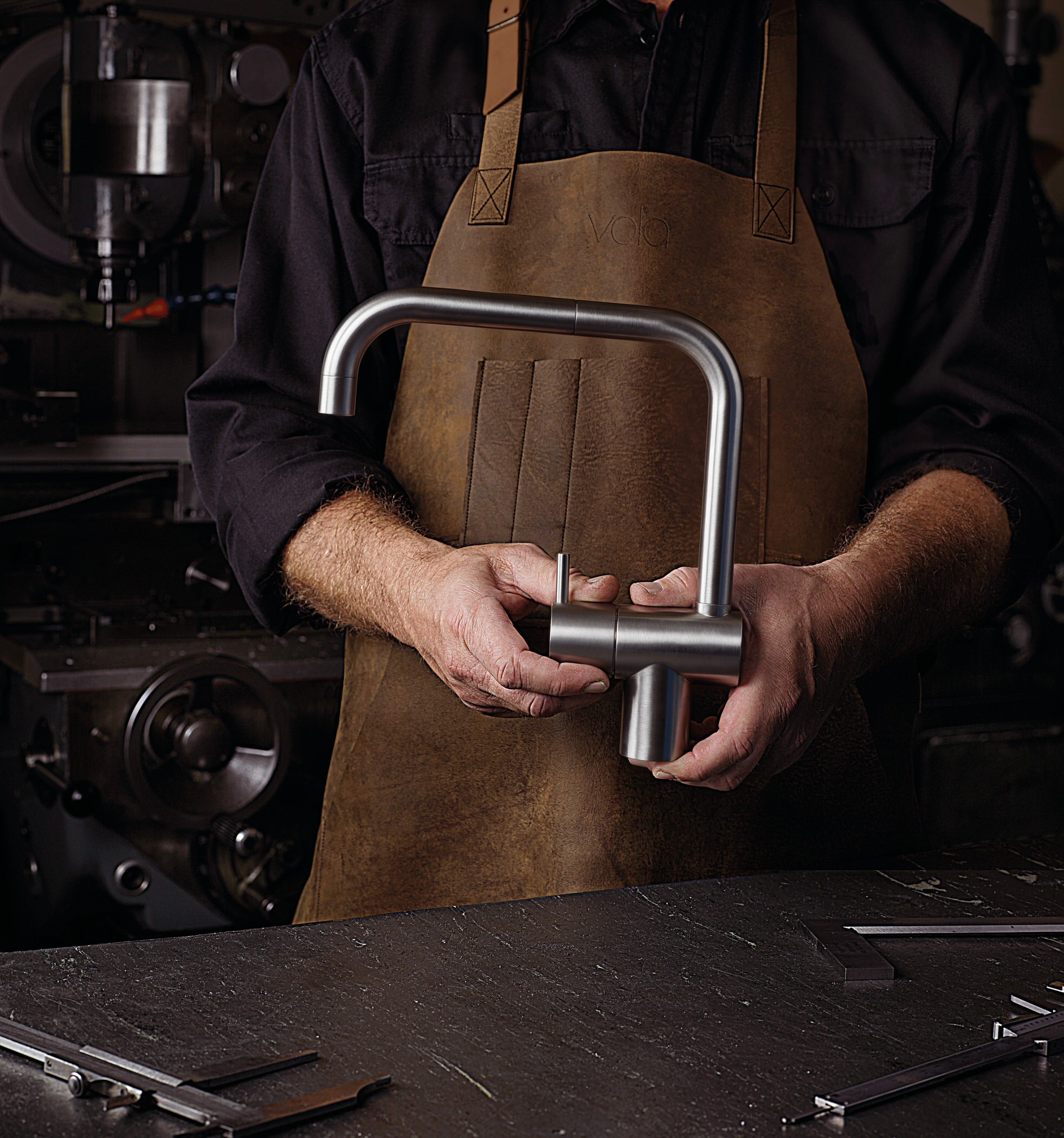
The modularity follows from that and is less exciting than it sounds, in the good way. Mixers, handles, plates and spouts are separate parts in separate finishes, and per Yellowtrace, "every product is made to order according to a designer or architect's specific guidelines and manufactured locally in VOLA's factory near Horsens, Denmark." Made to order usually means slower and more expensive, and here it also means the catalogue is a kit rather than a set of finished objects. You are not buying a tap. You are buying a valve, and then choosing what comes through the wall.
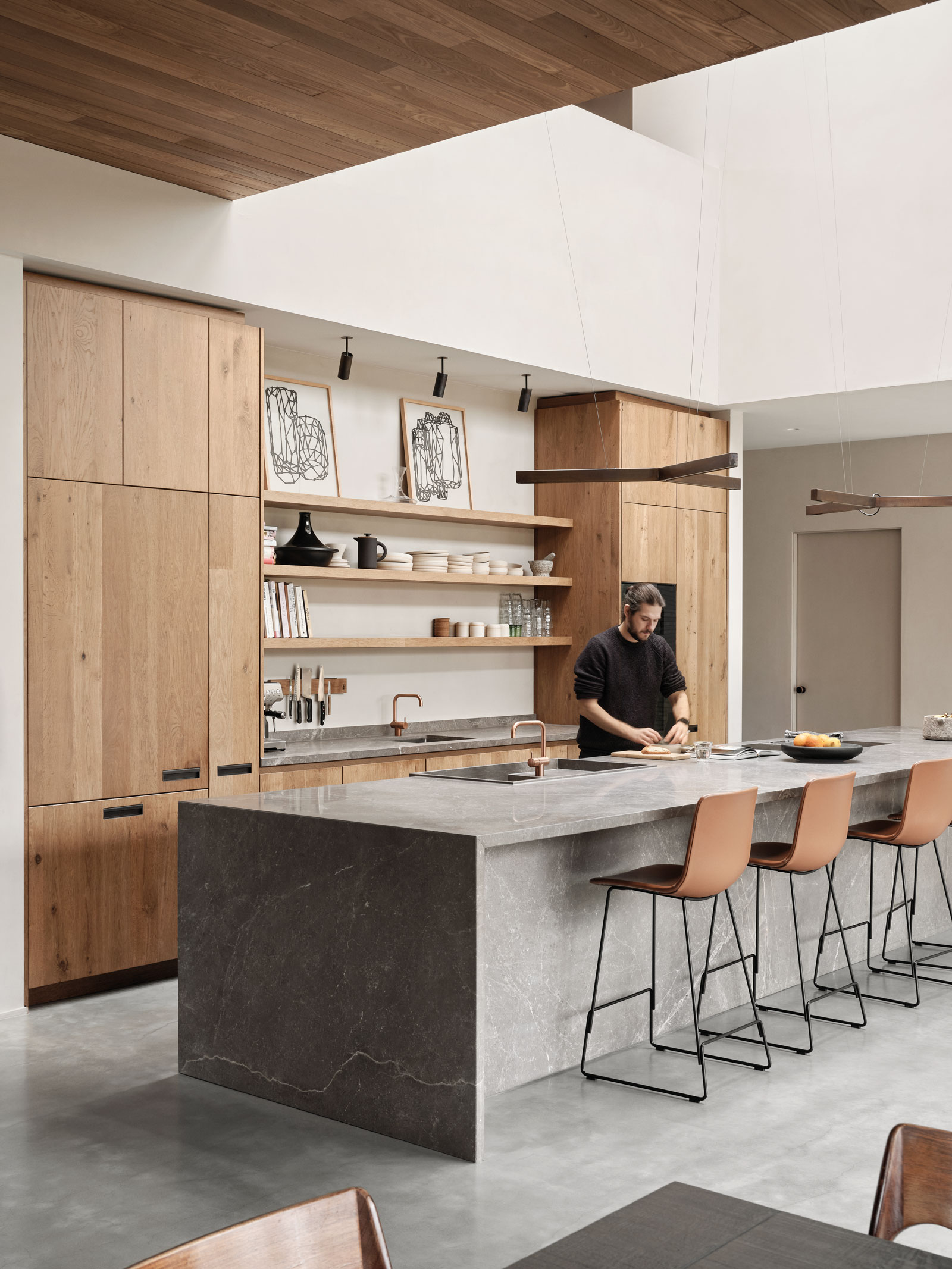
There is a counter-case and it deserves saying. Making everything to order in Denmark and shipping it to Sydney or Brooklyn carries freight, and lead times will wreck a schedule that was not planned around them, and a company that releases new products "only when there is a genuine need" is also a company that will not have the thing your client saw on Instagram. Longevity is not free and it is not always the right trade. On a five-year fit-out with a hard budget, a serviceable exposed mixer from a boring domestic manufacturer is the more honest answer, and pretending otherwise is a way of spending someone else's money on our own principles.
But for the building we actually want to make, the calculus is not close. We spend our arguing hours on concrete mixes and mineral plaster and whether a wall should be allowed to show its age, and then we hang a fifteen-year fixture off a hundred-year wall and call the project sustainable. A spare cartridge for a tap made in 1972 is a smaller idea than a low-carbon binder and it is a more reliable one, because it has already been proven by fifty-eight years of somebody bothering to keep the tooling.
Jacobsen drew a shape and then got out of the way of it. The handle in a Danish bank in 1968 is the handle you can order on Thursday. Nobody has improved the look of it, and everyone has been busy improving the inside of it, and the person washing their hands has no idea any of this happened. That is the correct outcome. Good hardware is not supposed to announce that it was thought about.
Sources & Credits
- "Putting the Power in the Hands of the Designer: VOLA's Modular Design System," Yellowtrace, 4 September 2023 (labelled a Yellowtrace Promotion supported by VOLA). https://www.yellowtrace.com.au/vola-tapware-modular-design-system-denmark/
- "VOLA. For Life: A New Perspective on a Time-honoured Classic," Yellowtrace, 21 June 2023 (labelled a Yellowtrace Promotion supported by VOLA). https://www.yellowtrace.com.au/vola-tapware-vola-for-life-danish-design/
- Photography: Yellowtrace, via Yellowtrace, https://www.yellowtrace.com.au/vola-tapware-modular-design-system-denmark/
- Photography: Andrea Papini, via Yellowtrace, https://www.yellowtrace.com.au/vola-tapware-modular-design-system-denmark/