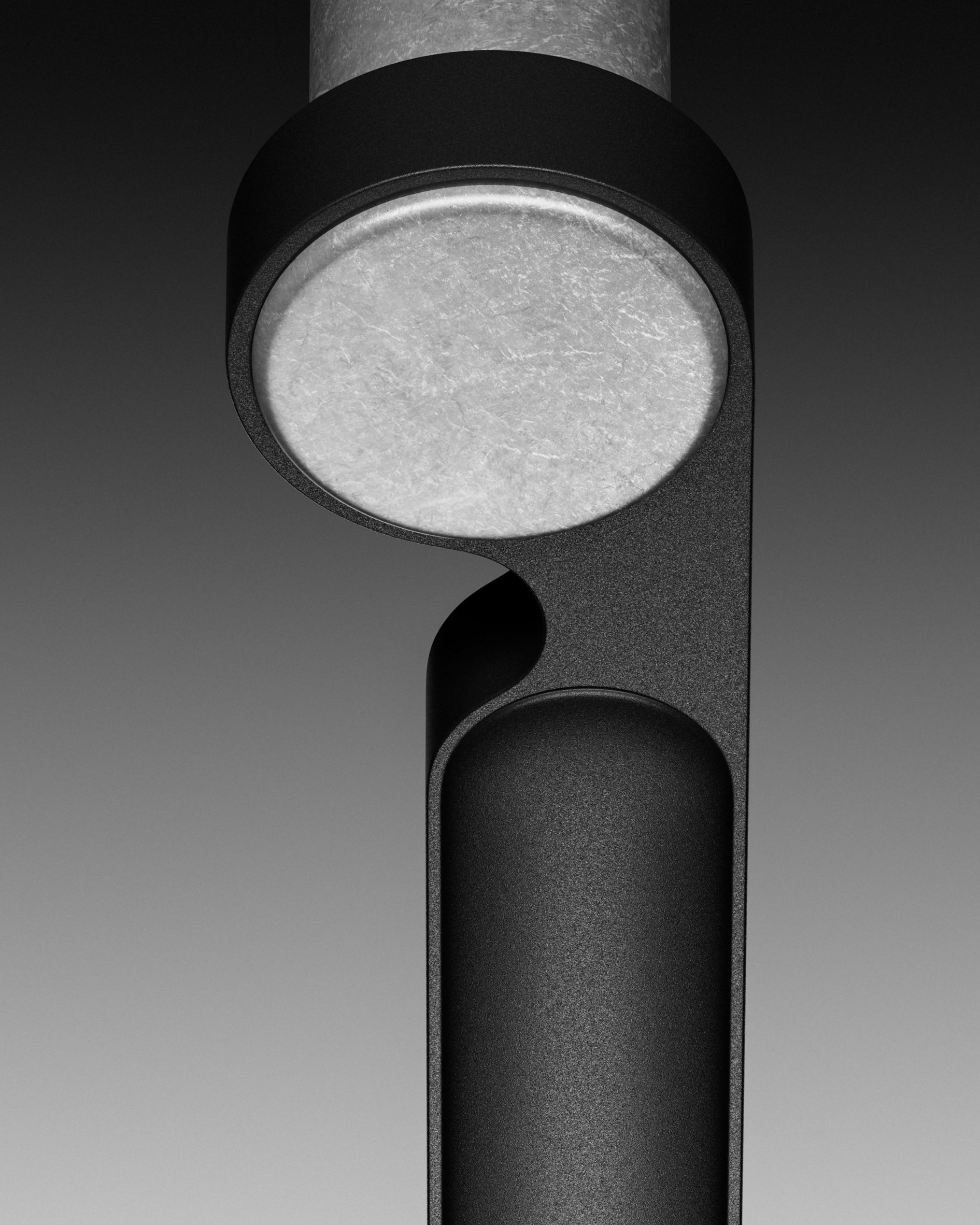
The FSB 1138 went out of production in 2005, and it did not go out of production because people stopped liking it. It went out because of the plastic.
That is the whole story, and it is a better story than the one being told this week, which is that a famous designer's famous object has come back. German hardware manufacturer Franz Schneider Brakel has relaunched the handle Dieter Rams drew in 1986, this time made entirely of aluminium, and Dezeen has reported the return with the reverence these things usually get. Rams is ninety-four. The handle is beautiful. Everybody is pleased.
Here is the part worth sitting with. According to FSB's own account of the relaunch, the original handle, the rgs, was made of natural-finish aluminium and thermoplastic. The aluminium was produced locally, on Brakel's Industriestrasse, where it is still produced. The thermoplastic had to be bought in from somewhere else. And over the years the plastic aged the way plastic ages, which is to say it did not develop character, it developed a problem, and eventually the aging characteristics of that one bought-in component fell below what the rest of the object could carry, and the whole handle was discontinued.
An object made of two materials died at the speed of the worse one.
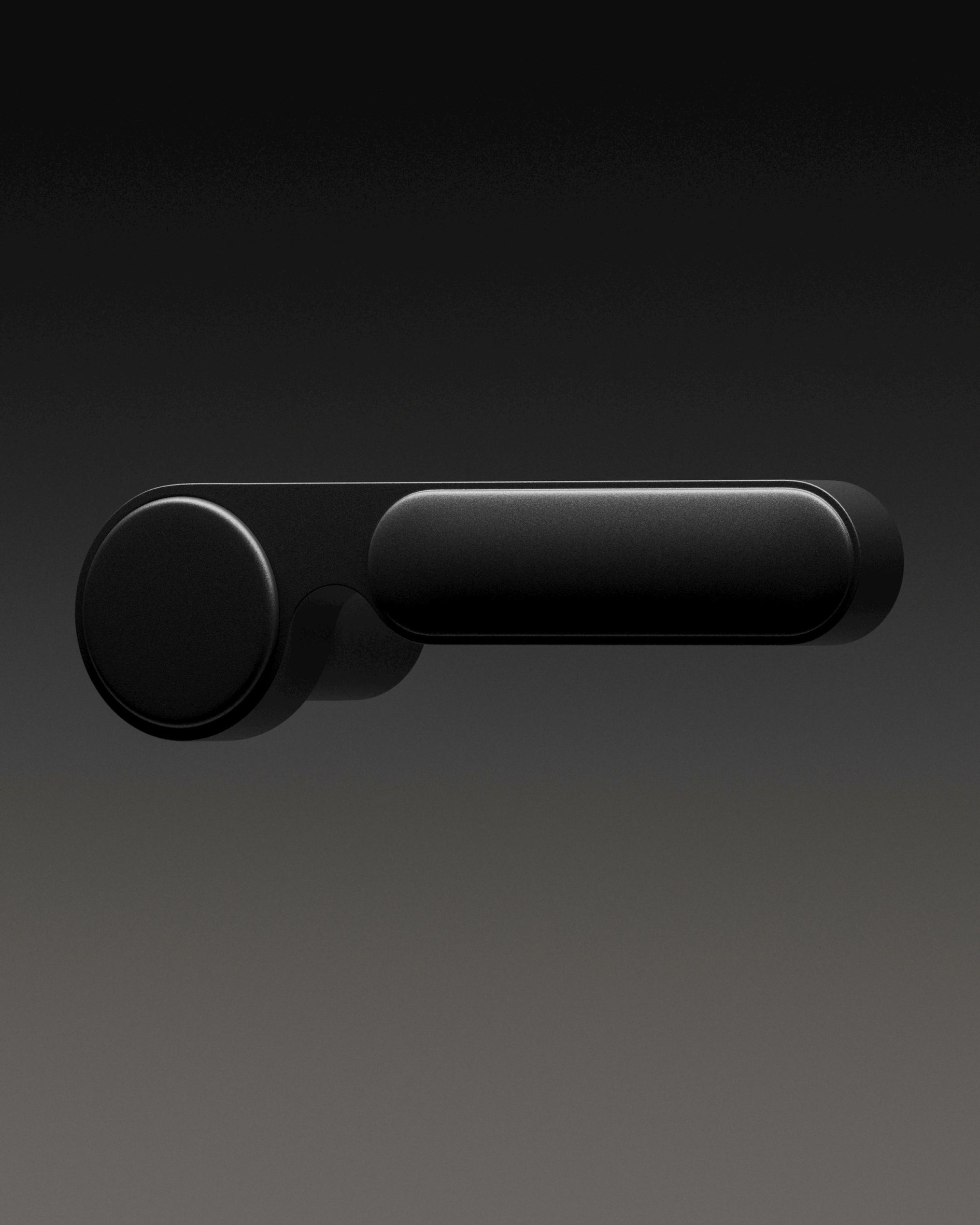
We think about this constantly, and not in a philosophical way. We think about it when a schedule comes back with a beautiful lever on a rose whose fixing screws are a grade of steel nobody would name out loud. We think about it when a client falls in love with a finish that has a five-year story and a fifteen-year building. The assembly is only ever as durable as the piece of it somebody else made cheaply, and the piece somebody else made cheaply is almost never the piece in the photograph. The 1138 is a very expensive lesson in this, delivered slowly, over seventeen years of production and twenty-one more of absence.
The fix is not clever. The fix is that the entire lever is now aluminium, made in Brakel, in a finish FSB calls Aluminium Pure, which reproduces the grey of the old rgs and, according to the company, will take a patina over years of use. Rams signed off on all of it. There is no new geometry, no new technology, nothing to announce. Somebody simply removed the part that could not go the distance and replaced it with more of the part that could.
Which raises the honest question about reissues, since reissues are mostly a business model. Rams himself is on record as being uneasy about his own inheritance: in a 2019 interview with Dezeen, the director of a documentary about him said Rams "regrets contributing to culture of overconsumption." So it is worth saying plainly that the only defensible version of bringing an old object back is the version that makes the next bringing-back unnecessary. A reissue that fails again in twenty years is just a slower kind of landfill. This one is at least arguing for its own permanence, which is a rarer thing to argue for than novelty, and much harder to photograph.
The 1986 workshop that produced it is the other reason this matters. Led by Otl Aicher, FSB brought designers to Brakel and asked them a question that reads today like a dare: "Is it even possible to create new forms anymore?" Hans Hollein came. Arata Isozaki came. Mario Botta, Peter Eisenman, Alessandro Mendini, Shoji Hayashi and Hans-Ullrich Bitsch came. Rams came with his student Angelika Knoop and with Petr Tučný. Nine concepts came out of it and three went into production, and the three were Hollein's, Mendini's and Rams's.
Look at that roster and then look at the answer that survived. Eisenman was in the room. Mendini was in the room. This was the exact moment when architecture was busiest proving that form could be quoted, inverted, ironised and stacked, and the object that outlived the argument was a circle, a curve, and a small dent where your index finger goes.
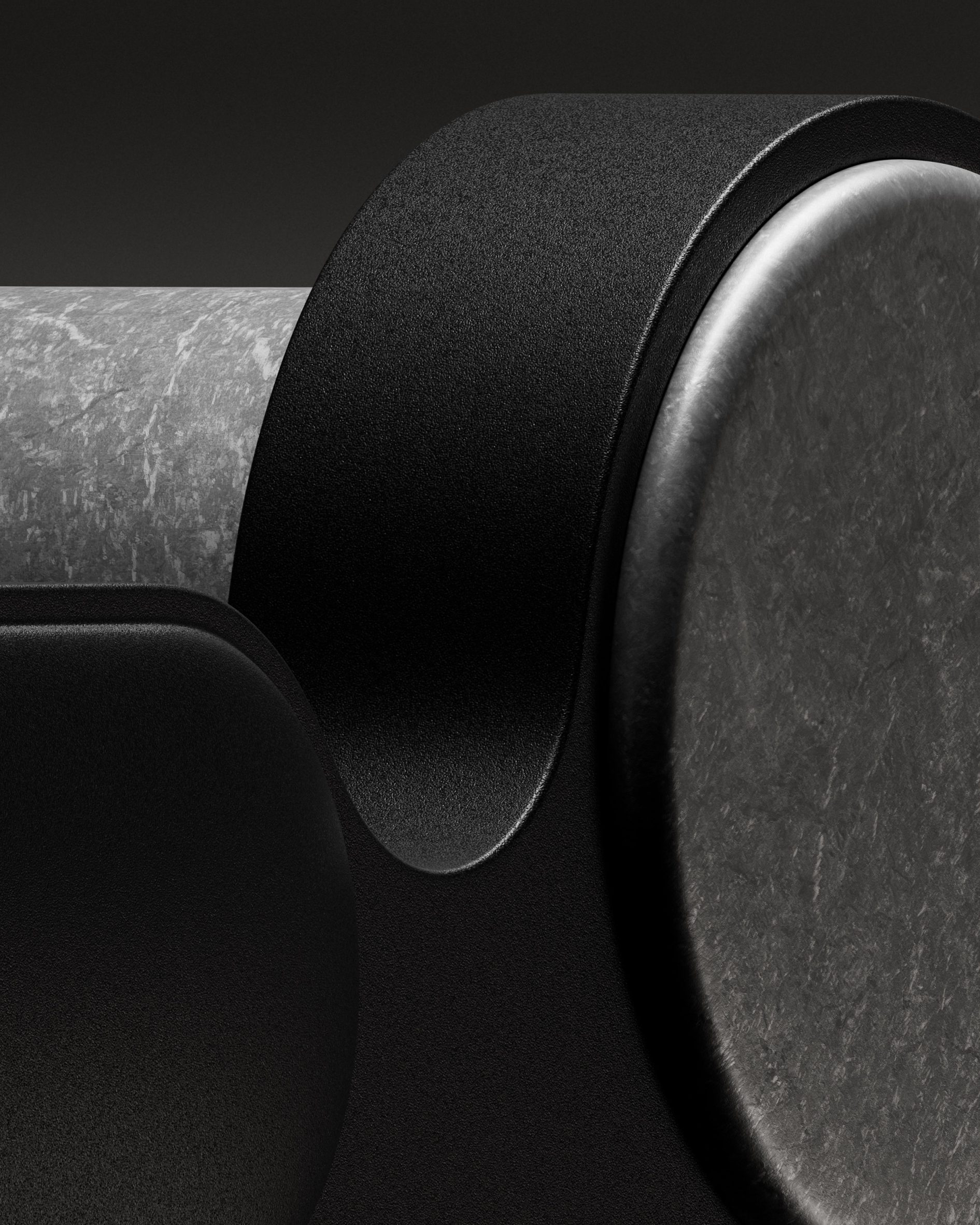
Klaus Klemp, who wrote Dieter Rams: The Complete Works, put the mechanics of it well in Dezeen's report: "The circle communicates the turning movement, while the recess and the softly curved handle naturally indicate the position of the hand." That is not a compliment about beauty. That is a description of a thing telling you how to use it before you have decided to.
It is also, we would say, the entire justification for spending money on hardware, and it has nothing to do with the schedule looking good. A door handle is the only piece of a building most people touch every single day, on purpose, with bare skin, usually while thinking about something else. The wall is looked at. The ceiling is ignored. The handle is held. If a building is going to be honest anywhere, it should probably be honest at the point of contact, because that is the point where a person cannot be fooled.

The industry seems to have arrived at this conclusion all at once, which is always slightly suspicious. In the same week the Rams handle returned, est living reported that the Australian hardware brand Bankston had taken its collections to NYCxDesign and 3daysofdesign with an exhibition called A Manifesto on Touch, arguing that "architectural hardware is not a finishing detail, but a design decision." They are right. They are also selling handles. Both of those things can be true, and the manifesto arriving as a brand programme is not a scandal, it is just the shape the conversation takes now, and the conversation is still the correct one.
So: specify the handle early. Pay for the metal all the way through. Ask which component was bought in and how it ages, and if the answer involves a polymer nobody wants to name, ask again.
Rams told Dezeen the 1138 is the kind of everyday design that "speaks for itself." Perhaps. It was quiet for twenty-one years first.
Sources & Credits
- Alyn Griffiths, "FSB relaunches 1986 Dieter Rams door handle with 'effortless grip'", Dezeen, 27 July 2026. https://www.dezeen.com/2026/07/27/fsb-1138-door-handle-dieter-rams/
- "Relaunch of the FSB 1138 by Dieter Rams", Franz Schneider Brakel press release, 15 June 2026. https://www.fsb.de/en/press/relaunch-fsb-1138-dieter-rams
- "Dieter Rams 'regrets contributing to culture of overconsumption' says documentary director", Dezeen, 5 March 2019. https://www.dezeen.com/2019/03/05/dieter-rams-documentary-gary-hustwit-interview/
- Megan Rawson, "Bankston Explores the Design Language of Touch", est living, 14 July 2026. https://estliving.com/bankston-explores-the-design-language-of-touch/
- Photography: via Dezeen, https://www.dezeen.com/2026/07/27/fsb-1138-door-handle-dieter-rams/
- Photography: via est living, https://estliving.com/bankston-explores-the-design-language-of-touch/